

The restoration of 123 St Stephen's Green
For more than two centuries, 123 St Stephen's Green has been at the heart of RCSI and a distinctive landmark in Dublin's city centre.
Now, a major conservation and restoration project is under way to protect its architectural heritage and ensure it can continue to support our students, researchers, clinicians and staff.
Explore the building’s history and follow the progress of the project below.
Lorem ipsum dolor sit
Since opening in 1810, the building has witnessed significant moments in Irish history, welcomed generations of healthcare professionals and helped shape the development of medical and surgical education in Ireland.
Watch the RTÉ Nationwide episode on the restoration, exploring the building's remarkable history and the work underway to preserve it.
A landmark worth preserving
After more than 200 years of continuous use, 123 St Stephen's Green requires significant conservation work to preserve its historic fabric for the future.
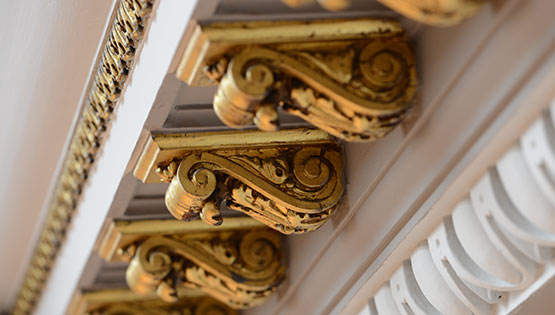
This once-in-a-generation project will includes the careful restoration of historic sash windows, repairs to the building's stonework and façade, replacement of roof slates using traditional materials and specialist conservation of important architectural features.
This work will safeguard one of Dublin's most recognisable buildings while ensuring it can continue to meet the needs of a modern university.
The history of 123 St Stephen’s Green
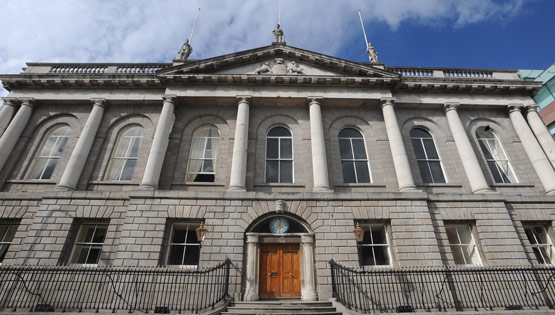
The story of 123 St Stephen's Green is closely connected to the history of Dublin, the development of healthcare education in Ireland and some of the defining events of the nation's past.
RCSI opened its first permanent home on St Stephen's Green in 1810, establishing a presence that has continued for more than two centuries.
Originally designed by architect Edward Parke, the building was subsequently extended in the 1820s to designs by William Murray. Its classical façade, distinctive architectural features and prominent position overlooking St Stephen's Green have made it a familiar feature of Dublin's streetscape.
The building also played a significant part in the Easter Rising of 1916. Under the command of Michael Mallin and Countess Markievicz, members of the Irish Citizen Army occupied RCSI during Easter Week. Bullet marks from the conflict remain visible in the building's façade today.
Beyond these historic events, 123 St Stephen's Green has been a place of education, discovery and professional development for generations of surgeons, doctors and healthcare professionals. Its halls, classrooms and historic collections tell the story of the evolution of healthcare education and the people who have shaped it.
The restoration will help ensure that this history remains part of Dublin's living heritage.

Follow our progress
Our specialist teams are working to conserve and restore 123 St Stephen's Green. We will share key milestones here, with photographs, as the work progresses.
Hoarding erected
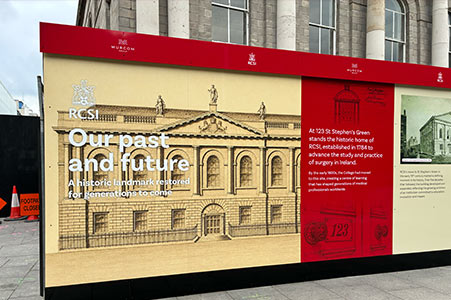
Approximately [X] metres of hoarding was installed around 123 St Stephen's Green to secure the restoration site and protect pedestrians throughout the works.
The hoarding also provides an opportunity to share the building's rich history with passers-by. Featuring archival photographs, historical illustrations and stories, it offers a glimpse into the people, events and architectural heritage that have shaped this Dublin landmark.
September 2026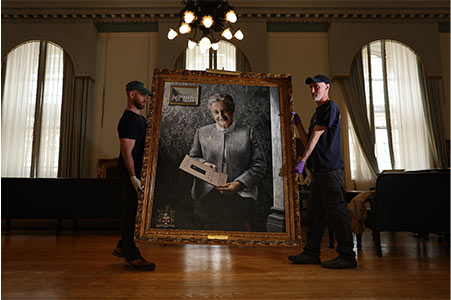
Protecting the building's heritage
Specialist conservation teams carefully catalogued, protected and relocated historically significant portraits, sculptures and artefacts ahead of the main restoration works.
Among the first visible milestones was the removal of the clock from above the building’s front doors. This iconic clock has long been a Dublin landmark, immortalised by James Joyce in Dubliners, where its strike of ten o'clock heightens the tension of Lenehan's vigil near St Stephen's Green. It will undergo expert conservation before being returned to its place on the façade.
The building’s collection of portraits and sculptures has also been carefully protected for the duration of the project. Some works have been moved off-site, while those too large to be relocated safely have been protected in situ. Among the artworks being safeguarded is RCSI's Women on Walls collection, which honours eight pioneering women whose contributions have transformed healthcare, science and society. You can find out more about the collection here.
July 2026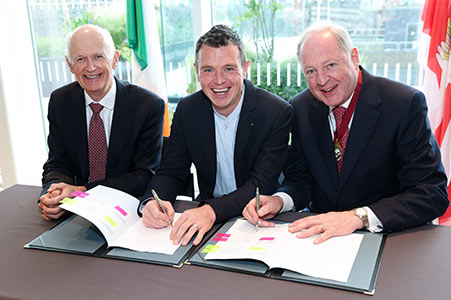
Restoration contractor appointed
We appointed Murcom Building Services to deliver the restoration and conservation of 123 St Stephen's Green. Murcom is Dublin-based contractor with extensive experience in conservation and restoration projects. The company has delivered a range of heritage-focused projects across Ireland, including restoration works at Trinity College Dublin, and has previously completed projects for RCSI.
Pictured above (L-R): Prof. Cathal Kelly, Vice Chancellor, CEO and Registrar, RCSI; David Nelson, Commercial Director, Murcom Building Services Ltd; and Michael Kerin, President, RCSI.
June 2026
The people behind the restoration
Restoring a building of this age and significance requires specialist knowledge, experience and craftsmanship.
The project brings together conservation architects, engineers, heritage specialists and skilled craftspeople, working collaboratively to protect the building's historic features while preparing it for continued use.
Our Estates and Support Services team is overseeing the restoration project and ensuring that the building's architectural heritage is protected while meeting the University's future needs.
Testimonial

Alistair oversees the conservation approach, helping to ensure that restoration works respect the building's historic character and are carried out in accordance with best conservation practice.
Murcom Building Services delivers the restoration works and coordinates the specialist trades and craftspeople involved in conserving the building.
Val O'Brien & Associates provides project coordination and oversees compliance, inspections and certification throughout the restoration programme.