
Psychology, Health and Medicine Conference 2026
The conference is hosted by the Division of Health Psychology of the Psychological Society of Ireland in association with the Northern Irish Branch of the Division of Health Psychology of the British Psychological Society.
The theme of this year’s conference – taking place on 24 April 2026 at RCSI Dublin – is 'Health Psychology in a Changing World: Navigating Complexity, Driving Impact'.
Health psychology in a changing world
The conference, organised by RCSI's Department of Health Psychology, is a key annual event for people working in the areas of psychology, health and medicine.
The aim of the conference is to promote health psychology and to provide a forum for sharing high-quality research, education/policy and practice on psychology and health, whilst also fostering opportunities to build and strengthen professional networks.
Please note: The event has reached maximum capacity and registration for the conference is now closed.

Discover our programmes
Download the conference programme and list of posters, conference book and abstract book for the Health and Medicine Conference 2026 taking place at RCSI Dublin below.
Public and patient involvement
There is significant public and patient involvement (PPI) in the organisation and delivery of the event. There will be a dedicated PPI session, developed in collaboration with PPI representatives on the conference organising and scientific committees. Read information about the session on embedding meaningful PPI in project proposals and funding applications here.
Katie Verling
Katie Verling is committed to expanding public understanding and appreciation of the choices individuals have in terms of well-being, treatment and care. She advocates for patient autonomy and raising the patient voice in all areas of health, sickness and end-of-life. She has lived experience as a patient and a patient advocate, and uses these to contribute to PPI research opportunities. Most recently she has contributed to initiatives and projects led by the HSE, HRB and RCSI.
Melody Chadamoyo
Melody Chadamoyo is a PPI contributor dedicated to shaping equitable, patient-centred research. With lived experience, community insight and expertise in race equity and emotional wellbeing, she ensures projects reflect the real needs of diverse and marginalised communities. Melody champions inclusive, trauma-informed healthcare and meaningful patient voices in research.
Lisa Whelan
Lisa Whelan has been primarily focused on advocating for epilepsy awareness. She is a media volunteer for Epilepsy Ireland and has been involved in a number of public awareness and advocacy campaigns. More recently, Lisa was part of the PPI panel on the EpiKnow research project at RCSI. She continues to advocate for epilepsy awareness through her own lived experience.
Speakers
This year’s keynote speakers are Professor Rona Moss-Morris (King’s College London) and Professor Gerard Molloy (University of Galway).
The opening address will be provided by Professor Diarmuid O’Donovan (HSE), while the closing address will be provided by Professor Niall Pender (RCSI).
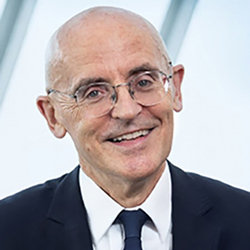
Professor Diarmuid O’Donovan
Director of National Health Improvement, HSE Public Health
Opening address
Diarmuid O’Donovan is Director of National Health Improvement with HSE Public Health. He and his team work on addressing health inequalities and developing partnerships for a Health in All Policies approach to improving population health.
He trained in general practice and public health and worked in several countries in Africa. From 2019-2023 he was Professor of Global Health at Queen’s University Belfast. Before that he was Director of Public Health in HSE West and Senior Lecturer in Social and Preventive Medicine at the University of Galway. He is one of the founders of the Irish Global Health Network, promoting education, research and advocacy on global health and development issues.
Professor O’Donovan researches and teaches on prevention, health equity and sustainability, and the right to health.

Professor Rona Moss-Morris
Professor of Psychology as Applied to Medicine, King’s College London
Keynote: From theory toward impact: The COMPASS journey in enhancing care for long-term conditions
People with long-term medical conditions (LTCs) experience anxiety and depression at two to three times the rate of the general population, and mental health comorbidity is associated with poorer outcomes and substantially higher healthcare costs. Standard cognitive behavioural therapies (CBT) are often less effective for this group because they target mechanisms derived from models of primary mental health disorders rather than distress that arises in the context of chronic illness.
To address this gap, we developed a theoretical model of adjustment to LTCs and used it, together with extensive input from patients and healthcare professionals, to create COMPASS: Navigating Your Long-Term Condition, a transdiagnostic digital CBT programme tailored to illness-related distress. We also developed the Illness-Related Distress Scale to help clinicians identify patients most likely to benefit.
Current work includes developing and implementing illness-specific versions of COMPASS for multiple sclerosis and inflammatory bowel disease, as well as industry collaboration to support wider implementation. This keynote will discuss some of the barriers and facilitators to adoption, particularly for digital interventions, to maximise the likelihood that the research leads to meaningful change in patient care.
 Professor Gerard Molloy
Professor of Health Psychology, University of Galway
Keynote: Medication use: navigating the complicated and the complex
Medicines use is best understood as a complicated behaviour that is embedded within complex systems. Complex systems produce emergent phenomenon that can be defined as properties that the components of the complex system do not have on their own and emerge only when the components interact in the wider system.
Some key emergent phenomena that can potentially influence medicines use e.g. the therapeutic relationship and trust between patient, healthcare providers and the healthcare industry, can be overlooked by too strong an emphasis on the behavioural specification in intervention design e.g. actor, action, context, target, time. When developing behavioural supports for optimal medicines use, there needs to be careful consideration of whether there is adequate time for the intervention and whether the intervention has the potential to disrupt the therapeutic relationship, particularly by undermining the trust between the patient and their healthcare provider.
Behavioural interventions, including medicines use interventions, should aim to enhance the therapeutic relationship between patients and healthcare providers by preserving and potentially enhancing trust in healthcare.

Professor Niall Pender
Head of Department of Health Psychology, School of Population Health, RCSI
Closing address
Niall Pender is Professor of Psychology and Head of Department of Health Psychology, School of Population Health, RCSI. He was Principal Clinical Neuropsychologist and Head of Department of Psychology at Beaumont Hospital for over 20 years. Professor Pender was Associate Professor in Neuropsychology, Trinity College Dublin since 2019 where he was course director of the first MSc in Clinical Neuropsychology in Ireland and led the neuropsychology research group.
Professor Pender was previously a consultant neuropsychologist at the Royal Hospital for Neuro-disability, London and a clinical neuropsychologist at the Maudsley Hospital, London. He trained in clinical psychology and neuropsychology at the Institute of Psychiatry, Psychology and Neuroscience, King’s College London where he also completed his PhD in 2005. He is a past president of the Psychological Society of Ireland and founding member of the Division of Neuropsychology. His research focuses on the cognitive, behavioural and emotional consequences of neurological and neurosurgical conditions.
Committees
Organising and delivery of the Psychology, Health and Medicine Annual Conference is supported by organising and scientific committees, with members drawn from universities across Ireland and representing a wide breadth of research expertise, as well as lived experience.
- David Byrne
- Melody Chadamoyo
- Mary Clarke
- Niamh Corbett
- Rory Coyne
- Frank Doyle
- Caroline Kelleher
- Brian Lynch
- Alan Maddock
- Lisa Mellon (co-chair)
- Jade Parnell
- Maria Pertl (co-chair)
- Timo Schurr
- Katie Verling
- Lisa Whelan
- David Byrne (RCSI)
- Melody Chadamoyo (PPI)
- Laura Coffey (Maynooth University)
- Sarah Cooney (UCD)
- Steven Coyne (PPI)
- Catherine Darker (TCD)
- Samantha Dockray (UCC)
- Simon Dunne (DCU)
- Lisa Graham-Wisener (Queen’s University Belfast)
- Caroline Heary (University of Galway)
- Noirin Lennox (University of Limerick)
- Evan Matthews (SETU)
- Dean McDonnell (SETU)
- Oonagh Meade (University of Galway)
- Garret Monahan (PPI)
- Catherine Moran (DCU)
- Chris Noone (University of Galway)
- Liz Simpson (Ulster University)
- Lorna Staines (Maynooth University)
- Katie Verling (PPI)
 Get in touch
We look forward to welcoming you to Dublin in April 2026. If you have any queries, don't hesitate to contact us and we'll get back to you.
Contact us Contact usSponsors