
What began with a troubling encounter in a rural hospital in Malawi has, a decade later, contributed to the launch of the country’s first National Breast Health Guidelines.
In November 2015, Dr Jakub Gajewski from RCSI School of Population Health was visiting a district hospital when he was shown images of a woman with extremely advanced breast cancer.
The woman had first visited her local health centre, where staff, despite having limited training in breast cancer, recognised that something was seriously wrong and referred her to a higher-level hospital. By the time she arrived, the disease had severely damaged her breast, and little could be done. She died shortly afterwards.
The encounter exposed a problem that went far beyond one patient. Women were reaching healthcare services too late, frontline healthcare workers had limited breast health training, referral pathways were poorly defined, specialist care was concentrated in a small number of facilities, and breast cancer was not comprehensively addressed in national health policy.
As Dr Gajewski left Malawi that Christmas, he kept returning to one question: what would need to change to give women with breast cancer a better chance? That question became the foundation for the Akazi project, formally established in 2018.
Akazi brought together RCSI researchers, Malawian clinicians, the Agency for Scientific Research and Training (ASRT), the Ministry of Health and other national partners to understand where the health system was falling short and develop practical ways to strengthen breast cancer care.
Over the years, the project has turned into a comprehensive programme of work strengthening breast cancer services in Malawi. It has attracted both competitive research funding and philanthropic support, and its progress has depended above all on sustained partnerships with local institutions and healthcare professionals.
Gaps in breast cancer care
Akazi began with a health-system capacity assessment research covering community awareness, frontline care, diagnostics, referral, workforce, financing, health information and policy. The research identified gaps across the entire pathway and showed that earlier diagnosis could not depend only on specialists in Malawi’s central hospitals.
Many women first seek care in community facilities, health centres or district hospitals, often far from specialist cancer services. To strengthen this first point of contact, Akazi worked with Malawian partners to develop the country's first comprehensive breast health training course for frontline healthcare workers.
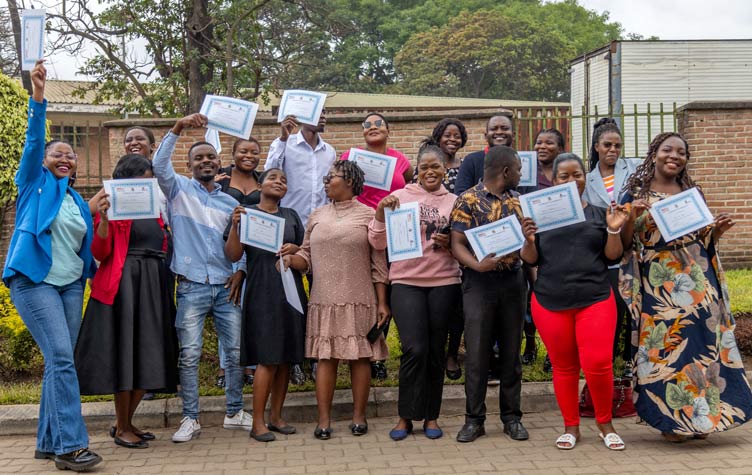
Almost 100 healthcare workers have completed the training, gaining practical knowledge to recognise potential signs of breast cancer and assess women presenting with breast health concerns.
In parallel, more than 300 health surveillance assistants received an orientation to breast health, extending knowledge to an even wider network of frontline workers serving local communities.
Akazi has also worked directly with communities. More than 300 community leaders across eight locations took part in breast health engagement activities delivered with district health services and local partners.
Community engagement expert Francesca Munthali used dialogue, music and locally relevant communication to address misconceptions and stigma and encourage women to seek help earlier. Through this work, Akazi estimates that breast health messages have reached approximately half a million people.
The aim has never been awareness alone. It has been to connect women who recognise a problem with a health system increasingly able to respond.
Watch a video about breast cancer awareness in Malawi
From research to national policy
In August 2026, Malawi launched its first National Breast Health Guidelines, marking an important step towards improving and standardising breast cancer care across the country.
The guidelines provide healthcare workers with a national framework for detecting, assessing, referring, diagnosing and managing breast conditions. They address an important gap in both policy and clinical practice.
Until now, breast cancer had not been comprehensively covered within national health plans, leaving frontline clinicians without a single practical national reference for managing women presenting with breast problems.
That’s why the guidelines represent an important milestone in the Akazi’s work and translate research and clinical expertise into practical resources for the health system. They also complement the frontline training introduced through Akazi: while training helps healthcare workers develop the skills to recognise breast health concerns, national guidelines provide a framework for applying those skills consistently.
Akazi has worked with people who understand the realities of delivering care in Malawi and translated research findings into solutions that can become part of the national health system.
Working towards the change
Earlier recognition is only one part of the challenge. Women referred for specialist care may still face repeated journeys, long waits, transport costs and extended periods away from their families.
At Queen Elizabeth Central Hospital in Blantyre, patients arrive from across southern Malawi. Close to the hospital, The Kitchen provides temporary accommodation for women waiting for cancer-related appointments, offering a place to stay, cook and support one another.
It is a reminder that the breast cancer pathway is shaped not only by clinical care, but also by distance, money and the practical realities of navigating a complex health system.
Watch a video about The Kitchen in Malawi
Akazi is now studying that pathway from first presentation through diagnosis, referral, treatment and follow-up, identifying where delays occur and where practical changes could make care faster and easier to access.
Ten years after that first encounter in a rural hospital, Malawi now has trained frontline healthcare workers, community breast health programmes and, for the first time, provided a national policy on how women with breast problems should be assessed and cared for.
For RCSI, Akazi shows what real-world research impact can look like: starting with the reality experienced by patients and healthcare workers, generating evidence, building trusted partnerships and staying involved long enough to see research become practice and policy.
What began with one question about why a woman reached care too late is now helping build a system in which, for the next woman, there may be much more that can be done.
RCSI is committed to achieving a better and more sustainable future through the UN Sustainable Development Goals.