Medical devices and drug delivery
Medical devices and advanced drug delivery technologies are changing how treatments are designed and delivered, making them more precise, more effective and better suited to the individual patient. At RCSI, engineers, pharmacists, materials scientists, clinicians and surgeons work side by side to develop technologies that address some of healthcare's toughest problems.
This research runs the full length of the innovation pathway, from materials science and pharmaceutical discovery through to clinical testing and commercialisation, ensuring new ideas have the greatest possible impact for patients.
Repairing and regenerating tissue
Much of this work is being undertaken by the internationally recognised Tissue Engineering Research Group (TERG), led by Professor Fergal O'Brien who is also RCSI Deputy Vice Chancellor for Research and Innovation. TERG researchers design advanced biomaterials and regenerative therapies capable of repairing bone, cartilage, cardiovascular tissue, nerves and other organs, creating options for injuries and diseases that currently have few.
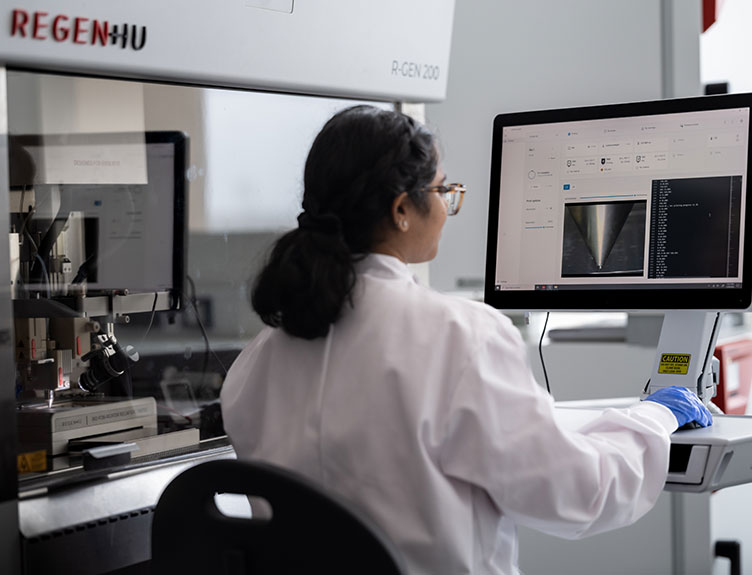
For epidermolysis bullosa, a genetic condition that leaves skin extremely fragile and prone to painful, chronic wounds, the group is developing a gene-activated scaffold that could be applied directly to a wound to help repair the skin and reduce infection, with the long-term goal of an off-the-shelf treatment. In spinal cord injury, TERG is working with the AMBER Research Ireland Centre for Advanced Materials and BioEngineering Research and the Irish Rugby Football Union Charitable Trust to develop implants that combine gene therapy, patient-specific design and electroactive materials to support nerve repair.
Getting medicines to where they're needed
Researchers in the RCSI School of Pharmacy and Biomolecular Sciences are developing innovative drug delivery systems that improve how medicines are administered throughout the body. Their research includes targeted drug delivery, nanomedicine, advanced therapeutics, biologics and pharmaceutical manufacturing technologies designed to deliver treatments more accurately, reduce side effects and improve patient outcomes.
From lab to clinic
Translating discoveries into products that benefit patients is a defining feature of RCSI's approach, and it is reflected in the spin-out companies that have grown out of this research. Pumpinheart, co-founded by Dr Aamir Hameed, is developing a device to treat heart failure with preserved ejection fraction, a condition that affects around half of all heart failure patients and currently has limited treatment options.
OncoLize, built on technology developed by Professor Helena Kelly, has created a gel that delivers cancer drugs directly into tumours, increasing the local dose while reducing the side effects associated with conventional chemotherapy. These companies are part of a wider pipeline of RCSI spin-outs working across medical devices and drug delivery, supported by close collaboration with hospitals, industry and investors. As this research matures, it continues to expand what is possible for patients with complex diseases, while strengthening Ireland's medical innovation ecosystem.