
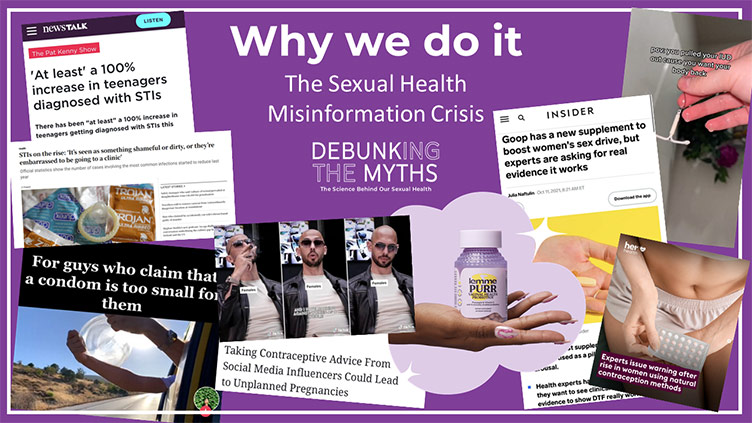
What happens when a teenager turns to social media for answers about their health? For many young people, platforms such as TikTok, Instagram and YouTube have become a first source of information about relationships, sexuality and reproductive health. Yet amid the endless stream of content, it can be difficult to separate fact from fiction.
Recognising the growing impact of health misinformation on young people, the Department of Obstetrics and Gynaecology at RCSI University of Medicine and Health Sciences launched 'Debunking the Myths: The Science Behind Our Sexual Health', a national outreach programme designed to provide evidence-based, medically accurate sexual health education directly to teenagers across Ireland.
Funded by Research Ireland and supported by The Rotunda Hospital, the programme brings healthcare professionals into schools and community settings to address common misconceptions, answer questions and help young people make informed decisions about their health and well-being.
Reaching young people where they are
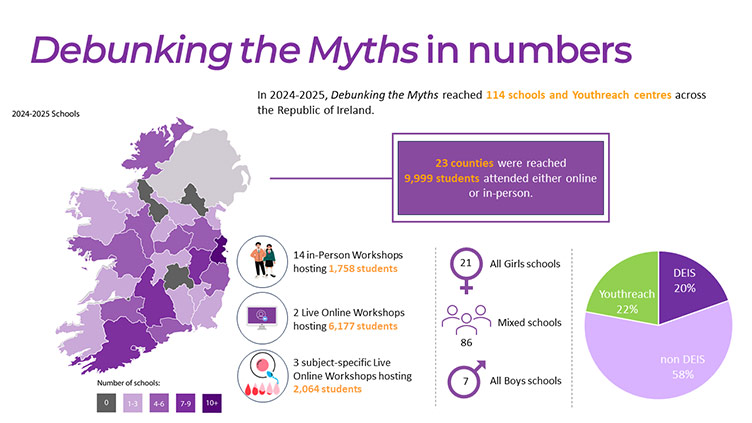
During the 2024-2025 academic year, the programme engaged more than 10,000 students across 23 counties through interactive workshops delivered in public, private and DEIS schools, as well as YouthReach centres.
At the heart of the programme is a simple but powerful idea: young people should have access to trusted experts.
Workshops are delivered by multidisciplinary teams of doctors, nurses, psychologists, researchers and educators, offering students the opportunity to hear directly from healthcare professionals and ask questions in a supportive and evidence-based environment.
The initiative is the only programme of its kind in Ireland that directly connects teenagers with practising medical experts to discuss sexual and reproductive health.
Measurable impact
Evaluation findings demonstrate the programme's effectiveness in improving knowledge and awareness among participants.
Following a single two-hour workshop, student understanding of Sexual Assault Treatment Unit services increased by 44%, while knowledge of trusted sexual health resources increased by 35%.
The programme has also received strong endorsement from educators. Among teachers surveyed, 92% said they would recommend the programme to colleagues, and 90% supported its inclusion within the national Relationships and Sexuality Education curriculum.
These findings highlight not only the demand for reliable sexual health education, but also the value of connecting young people with healthcare professionals who can provide trusted, evidence-based information.
Listening, adapting and building trust
A key strength of Debunking the Myths is its commitment to co-creation. Programme content is continuously shaped by feedback from students, parents and teachers, ensuring workshops remain relevant to the issues young people are facing. As new misinformation trends emerge online and clinical guidance evolves, the programme adapts in real time.
This responsiveness has helped build trust with participants, creating a space where difficult conversations can take place openly, respectfully and without judgement.
By combining clinical expertise with active listening and community engagement, the programme supports young people to critically evaluate the information they encounter and develop lifelong health literacy skills.
Extending impact beyond the classroom
The influence of Debunking the Myths reaches far beyond the students who participate directly.
Through media engagement, public education activities and collaborations with health sector partners, the programme has contributed to national conversations about sexual health education and informed wider discussions on curriculum development.
Its model, grounded in clinical expertise, community partnership and continuous evaluation, offers a framework that can be adapted to address other public health priorities and community needs.
A university making a difference
Debunking the Myths demonstrates the unique role universities can play in tackling societal challenges. By bringing together education, research, clinical expertise and community engagement, RCSI is helping young people develop the confidence to question misinformation, find credible sources and make informed decisions about their health.
RCSI is committed to achieving a better and more sustainable future through the UN Sustainable Development Goals.