Surgery
Report by Kieran Ryan, Managing Director, Surgical Affairs
The Department of Surgical Affairs is responsible for the delivery of training programmes to produce consultants in surgery and emergency medicine for the Irish health system. We also provide a range of educational and professional development supports for doctors, surgeons and other healthcare professionals.
Our vision is to deliver the highest possible standard of education and training to support doctors in their day-to-day work delivering health services to patients.
In Surgical Affairs, we are focused on growth and relevance. We work closely with the HSE’s National Doctors Training and Planning unit to maximise the number of postgraduate training posts. For the July 2025 intake, we expanded the intake of Core Surgical trainees from 80 to 100, so the CST programme now has over 180 trainees in the system at any one time. We also recruited 64 Higher Surgical Specialty trainees across all specialties and 24 Emergency Medicine Specialty trainees, along with 40 Core trainees in Emergency Medicine.
More than 960 people are registered with RCSI’s CPD programmes and we run degree-awarding programmes such as the Master’s degrees in Surgery and Human Factors and Patient Safety.
The challenge is to accommodate the additional capacity required by this growth in numbers. In 2024, we received significant capital funding from the HSE to invest in surgical training equipment, both in RCSI and regionally, to help create additional capacity.
In growing our student and trainee numbers, we are mindful of the availability of tutors and trainers to support that growth. In working with the specialties and hospitals to identify more training posts and ensure the availability of trainers, we try to remove unnecessary administrative workload from educators, so they have as much contact time with trainees as possible.
RCSI Surgery in numbers
- 36 accredited surgical training hospitals
- 160 Core Surgical trainees
- 294 Higher Surgical trainees
- 83 Core Specialty Emergency Medicine trainees
- 64 Advanced Specialty Emergency Medicine trainees
- 130 online and classroom courses offered
Surgical practice
As President, Professor Deborah McNamara has prioritised the engagement of early-career consultants with the College and in surgical training in particular. Through the RCSI Early Careers Network Group, led by Ms Christina Fleming and Mr Tristan Cassidy, the College identifies the needs of early-career surgical consultants and provides the necessary educational, organisational and mentorship supports to assist them to establish themselves in their practice, as they embark on the next phase of their relationship with the College, by ensuring they have access to leadership opportunities within the College in training, assessment and examinations.
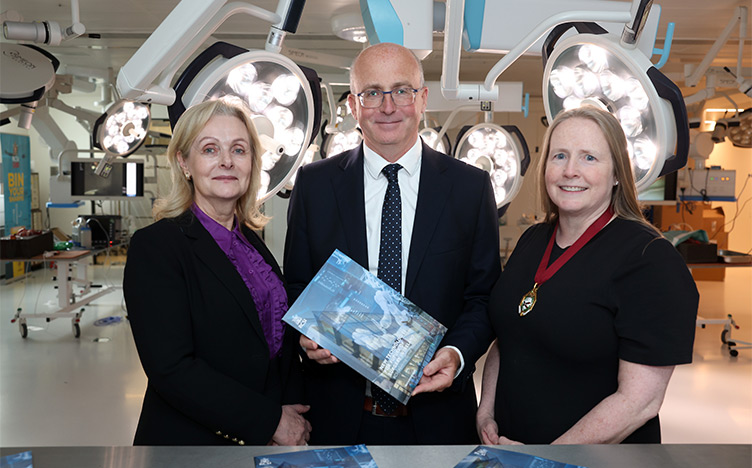
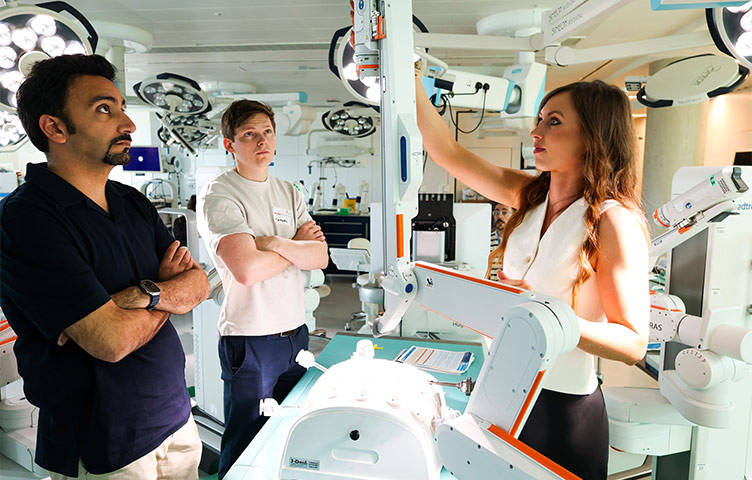
Professor Barry McGuire, Professor of Surgical Education and Academic Development, leads the Robotic Surgery Advisory Group, made up of leading consultants in robotic-assisted surgery. In February, the group launched the Robotic Surgery Clinical Governance guidelines, based on international best practice, which enable hospitals and clinical directors to safely introduce robotic-assisted surgery into day-to-day practice. More robotic surgery platforms are being purchased by Irish hospitals and our trainees and surgeons need to be appropriately trained and familiar with these platforms so that they can get the maximum benefit from them.
To that end, the College is working with its industry partners, primarily Intuitive (the DaVinci Robotic platform), Medtronic and M.E.D. Surgical for the CMR Platform, who support our conferences and training programmes. Surgeons need to be competent in the use of the technology as opposed to proprietary devices and our approach to training is multiplatform. This year, we have worked to develop a robotic-assisted surgery training curriculum to launch next year.
Postgraduate and continuing education and research
We are grateful to Johnson & Johnson for their ongoing support of the Progress Women in Surgery Fellowship, which this year was awarded to Ms Lauren V. O’Connell, who is undertaking a Fellowship in advanced colorectal cancer at the Peter MacCallum Cancer Centre in Melbourne, Australia.
We continue to deliver our annual programmes, including Surgical Bootcamp, led by Dr Dara O’Keeffe, for new surgical trainees. We are grateful to Dr O’Keeffe, the team in Surgical Affairs and the trainers who give up their time to help the new intake of surgical trainees with their induction into surgical training before they deploy to the hospitals.
The Intercollegiate Surgical Skills Competition, run by the surgical societies in the six medical schools on the island, allows students who aspire to a career in surgery to get involved at an early stage. Our work in the space of health and well-being for surgical trainees and trainers is ongoing. We have upgraded our M surgery platform, which our trainees and trainers use to access information during their training programmes, to be more intuitive. Sinead Dixon, a team leader and experienced surgical training administrator, is our health and well-being officer. She has worked closely with Patricia Malone, one of our programme managers, to develop useful and informative resources, including the Safe and Sound podcast, for trainers and trainees.
We work closely with our colleagues in RCSI CoMPPAS, the student support service, who provide counselling support for trainees. With the Irish Surgical Trainees Group, we have developed a pilot peer-to-peer mentorship programme, with senior trainees acting as mentors for early-career trainees. In addition to the surgical training programmes, our CPD scheme, supported by the HSE, delivers over 144 courses each year to a significant number of NCHDs in surgical and Emergency Medicine posts across the country. We have developed specific programmes geared towards individual advancement for members of this cohort. Previously, we introduced the Basic Surgical Science and Practice programme, and this year we launched the Intermediate Surgical Science and Practice programme, focusing on the advancement of more specialtyspecific skills.
Committees and working groups
The short-life working group on New Technologies for Future Surgery in Ireland, chaired by Professor Ronan Cahill, achieved basic consensus across the various surgical communities in Ireland on the importance of emerging technologies such as robotic-assisted surgery, artificial intelligence, digital information and records, and the College’s role in making people aware of the new technologies as well as facilitating the necessary training and education for surgeons to introduce them into their practice.
Allied to this, President Deborah McNamara asked Professor Micheal O’Riordain to look at the area of artificial intelligence as it relates to educational and awareness issues to be addressed by the College.
Professor Camilla Carroll, RCSI Ambassador for Sustainable Surgery, has played a key role in updating the Green Theatre Checklist, established in 2022 by the Surgical Royal Colleges of England, Edinburgh, Glasgow and Ireland, an initiative designed to help surgical teams minimise their environmental impact. RCSI received a grant of €120,000 from the HSE to support the development of a Green Theatre accreditation programme. President McNamara asked Professor Killian Walsh to lead a short-life working group looking at the health and well-being supports provided by the College to trainers and trainees to help identify any areas requiring improvement.
The President established another short-life working group to develop a surgical clinical governance framework under the chairmanship of Mr David Moore. This will enable the College to provide guidance to surgeons and surgical teams on good multidisciplinary teamwork to ensure patient safety while fostering innovation in a safe and ethical way.
Professor Eamon Rogers was appointed as National Co-Lead for the National Clinical Programme in Surgery (NCPS). I wish to acknowledge the important contribution of Mr Kenneth Mealy, former President of RCSI, who served for many years as the National Co-Lead for the NCPS. RCSI, with the NCPS and the National Clinical Programme for Paediatrics and Neonatology (NCPP&N), has launched Paediatric General Surgery: A Model of Care for Ireland 2024, a comprehensive framework to enhance surgical services for children close to where they live, ensuring access to a high standard of surgical care with clear oversight and governance. The model was developed by RCSI in collaboration with the HSE, the Royal College of Physicians of Ireland (RCPI) and a national network of hospitals providing surgical care for children supported by Children’s Health Ireland.
An initiative of the RCSI National Clinical Programme for Cardiothoracic Surgery to reduce inpatient waiting times and drive improvements in outcomes for patients has been awarded HSE Spark Innovation funding. The funding will enable the programme to work with the four cardiac and five thoracic units in Dublin, Cork and Galway, to design and implement an innovative, patient-centred National Digital Cardiothoracic Surgery dashboard.
The National Surgery Research Support Centre (NSRSC) continues to foster and support the involvement of surgeons in clinical trials. In September 2024, the NSRSC hosted the Bristol, Oxford and Aberdeen Surgical Trials Unit Clinical Trials (BOASTIC) course, the first time the course has been hosted outside the UK. Trainees from the UK and Ireland participated in three days of training in running surgical clinical trials.
Over 50 peer-reviewed publications were presented at the Millin Meeting. I wish to thank Professor Stewart Walsh, the Clinical Lead and Dr Ann Marie Byrne, Programme Director for the NSRSC, for their leadership in growing the trials network. The NSRC is currently supporting eight clinical trials across areas such as appendicitis, diabetes, bariatric surgery and wound healing, and working on multinational studies.
The National Human Factors and Patient Safety Conference was hosted by Professor Eva Doherty, Director of Human Factors. Dr Helen Bevan, OBE, an international thought leader on patient safety, was the keynote speaker.
International activities
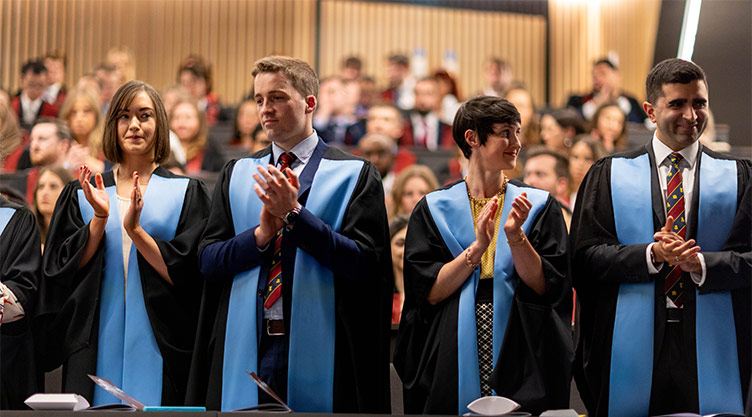
Our International Surgical Fellowship Programme, led by Professor Oscar Traynor, sees international surgical fellows come to Ireland for subspecialty fellowship training and return to their home countries having worked in the Irish health system. The programme goes from strength to strength with over 50 Fellows participating across the two-year programme. We are grateful for the ongoing support of the specialties and trainers who host these Fellows.
Our overseas MRCS examinations continue to grow with hubs in Cairo, Bahrain and Malaysia. Professor Dr N Premnath, RCSI Director of Surgical Examinations and Education, Malaysia, has helped establish a new exam centre in Sabah, where the first exams were held in May. Growing numbers take the membership exams with RCSI, ensuring our international reputation, membership and fellowship across the globe. We are grateful to the international partners who help us host these exams. I thank the team in RCSI Surgical Affairs for their hard work, professionalism and dedication to all our trainees, trainers, students, Fellows and Members. Surgical and Emergency Medicine training has grown under a team led by Caroline McGuinness, Professor Kevin Barry, Mr Dara Kavanagh and Dr Gareth Quin. Padraig Kelly, Associate Director for Operations and Planning, and Paula Mansell lead the team delivering our Academic and CPD programmes. Regulatory Affairs, Quality Assurance and Accreditation is ably led by Emeka Okereke. Professor Barry McGuire and our academic and teaching faculty deliver a huge programme of training and education to almost 2,000 scholars each year.
Finally, I wish to thank all Fellows, Members, trainees and associate colleagues who assist in the delivery of our teaching, training, assessments and examinations, the Council of RCSI for their ongoing support, and my colleagues on the senior management team and across RCSI.
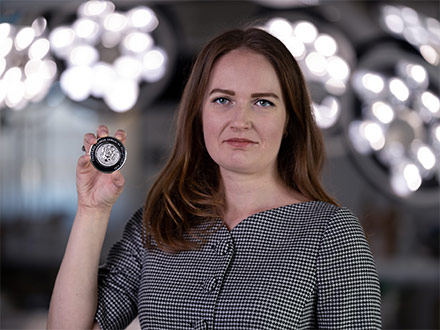
"I am deeply honoured to have been awarded the 2025 PROGRESS Women in Surgery Fellowship by RCSI. This recognition represents a pivotal moment in my surgical training and a meaningful opportunity to advance the care we provide to patients with complex colorectal cancers in Ireland.
As a Specialist Registrar in General and Colorectal Surgery at the Mater Misericordiae University Hospital, I have seen first-hand the challenges faced by patients with locally advanced and recurrent rectal cancer. Access to cutting-edge techniques and multidisciplinary care can significantly improve outcomes, but the most complex cases may still require patients to travel abroad.
With the support of this Fellowship, I will complete a period of subspecialist training at the Peter MacCallum Cancer Centre in Melbourne, one of the world’s foremost centres for cancer surgery. There, I hope to refine my skills in managing highly complex disease, particularly through minimally invasive and multidisciplinary approaches. Beyond clinical expertise, I’m also committed to equity in surgical care and training. I want to help build a future where access to advanced treatment does not depend on geography or circumstance, and one where women in surgery are empowered to lead, specialise and innovate without barriers.
The PROGRESS Fellowship embodies these values. I’m grateful to RCSI for championing this vision and for investing in the next generation of female surgical leaders. I look forward to bringing this experience back to Ireland and to making a lasting impact on patient care, surgical education and our wider health system."
Ms Lauren V. O’Connell, PROGRESS Fellowship recipient