School of Medicine
Report by Professor Gerry McElvaney, Head of School of Medicine
In the School of Medicine, we have implemented the third year of our new Transforming Healthcare Education Programme (THEP) curriculum.
Thanks to the commitment of our colleagues, the inevitable challenges as the programme advanced into the clinical arena have been met. Our students appreciate that it is a new programme but also that it is a more modern programme and one with which their prospective employers in other countries will be familiar. We can take significant learnings from the students’ feedback.
One of the hallmarks of THEP is the considerable amount of information given to students as they progress through the years, information which is also available to faculty for evaluation purposes. If a student appears to be having difficulties, we can recognise that early and offer appropriate support. Another advantage of the new programme is the emphasis on resilience, giving students the tools to deal with challenges that may arise.
The 2025 International Education Forum offered the opportunity for an exchange of ideas with our colleagues in Bahrain, where we now have a larger teaching faculty. We both have introduced new digital tools to support our curriculum. Practique, which underpins our exams is running very well both here and in Bahrain and Kaizen monitors students in both locations.
The Prescribing Safety Assessment (PSA) exam has been a major focus. This year we required students to sit mock exams before they could sit the final exam. This approach helped students concentrate their minds on the exam and led to excellent results, with two of our students earning some of the highest marks across many centres.
With increased student numbers, we have added extra clinical sites for exams. This year we used Kilkenny for our final exam; this was a tremendous success, thanks to the help of our clinical colleagues there. Using Practique, each examiner has a tablet where they input their marks and comments so those running the exams are getting information in real time and can address any issues or discrepancies as they arise. Credit for the smooth running of our exams and operations goes to Kenny Franks from the Student, Academic and Regulatory Affairs team and Conor Murney, Head of Operations.
With the deans of the other medical schools in Ireland, we are working to solve the issue of our non-EU students being unable to secure internships in Ireland. Because the UK has opened its doors to foreign graduates since Brexit, we are currently losing excellent students to the UK.
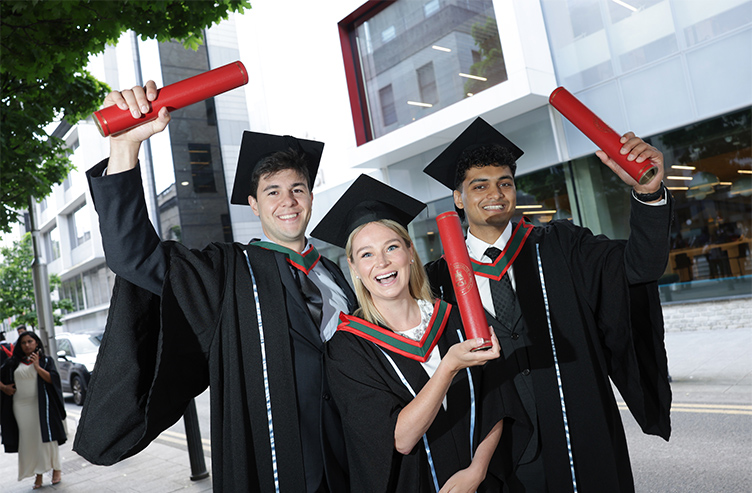
With larger student numbers, the Conference and Events Department took steps to streamline and shorten the 2025 conferring ceremony, which the students and their families appreciated.
Integrating Personal and Professional Identity formation into the medical curriculum
by Professor Anne Hickey, Deputy Dean for Positive Education
Traditionally, medical education has focused on anatomy, physiology and clinical skills training, and has focused less on professionalism, resilience under pressure and leadership skills. Lifestyle and well-being, which are key to enabling students to support their own health and that of their future patients, have been neglected areas of medical education.
As technological innovation in healthcare accelerates, the human dimension of healthcare becomes ever more important. As such, medical education has become more than the transfer of knowledge and clinical skills; it needs to encompass also the development of well-rounded, people-focused graduates with a personal and professional identity (PPId) who can connect with their patients and their colleagues.
These concepts were central to the development of the new medical curriculum at RCSI. The three key curricular pillars are head (knowledge), hands (skills) and heart (PPId). PPId integrates three key areas – professionalism, leadership and resilience – which are sewn into the fabric of the curriculum from first to final medical years.
The curriculum also integrates lifestyle medicine, which focuses on the enhancement of health and well-being, and the prevention and treatment of illness. This is achieved through evidence-based approaches to physical activity, nutrition, sleep, social connectedness, smoking, and drug and alcohol use.
Focus on PPId constituents: professionalism, leadership and resilience
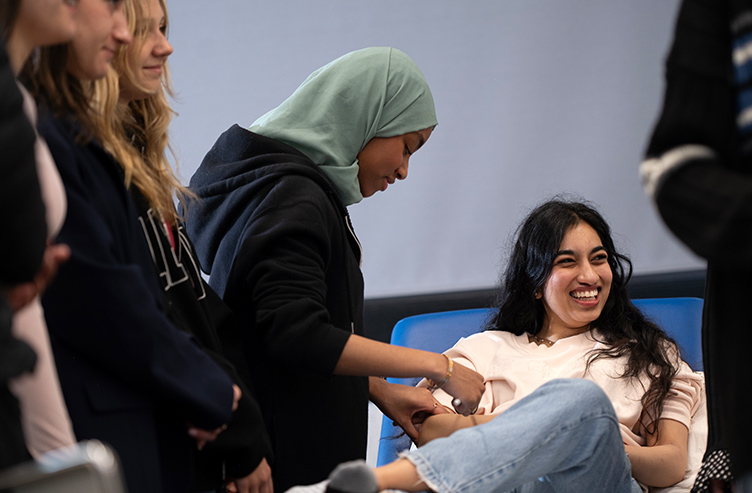
Our students come from different backgrounds and carry different life experiences with them. Education in professionalism means providing opportunities within the curriculum for students to develop values, behaviours, attitudes and approaches to professional relationships and patient safety. Education in effective leadership provides students with opportunities to recognise when to lead, when to listen, and how to lead oneself effectively, including how to embrace other people’s ideas and recognise when to let someone else take the reins.
Exploration of resilience in the curriculum examines challenges in students’ university and future professional lives, facilitating students to develop strong coping and reflective skills for current and future pressures and stresses in clinical practice, using key concepts of resilience and growth mindset. These skills are developed and assessed using a variety of teaching and assessment approaches to ensure that students are not only taught to treat illness, but also how to promote health and well-being - both for patients and for themselves.