Introduction
Report by Professor Tracy Robson, Deputy Vice Chancellor for Academic Affairs
It’s been an exciting year at RCSI as we progressed our strategic objectives to transform education and student success by expanding our educational offerings, both in Dublin and overseas. To support that growth, we have made significant upgrades to our infrastructure to enhance the educational experience of our students.
Our School of Dentistry has recruited fresh talent to roll out RCSI’s brand new Bachelor of Dental Surgery, Ireland’s first community-based dental degree. We will be welcoming our first group of students this September, significantly boosting the number of dentistry places available nationwide. Once we are fully up and running, we’ll be training 375 students and delivering an impressive 30,000 community dental treatments every year. Our new Sandyford Dental Education Centre, complete with cutting-edge simulation facilities, has now been completed and we look forward to the official opening with the Minister for Health, Jennifer Carroll MacNeill TD in July.
Furthermore, we have broken ground on our second centre at Connolly Hospital, another big stride toward supporting our dental students. Looking beyond Ireland, we launched our International College of Pharmaceutical Innovation at Soochow University’s Future Campus in China. This marks our first direct university-to-university collaboration. We welcomed 158 students between our BSc in Pharmacy and BSc in Advanced Therapeutic Technologies, and another 20 students have joined the new MSc by Research programme.
We also responded to the Government’s call for more health science professionals by increasing our pharmacy intake to 130, more than double what it was in 2019. The Minister for Further and Higher Education, James Lawless TD, will join us in July to officially celebrate the opening of our new School of Pharmacy and Biomolecular Sciences teaching laboratory. Undergraduate student numbers are also up significantly in physiotherapy.
Our BSc in Advanced Therapeutic Technologies entered its third year, and students received hands-on experience with eight-month placements in the pharmaceutical industry. This programme was developed alongside industry partners to ensure that we are addressing real skill gaps.
On the Medicine front, we are proud to have rolled out the third year of our innovative Transforming Health Care Education Programme (THEP) curriculum, complete with a new clinical tutor system that provides hands-on support for students in real clinical settings.
Driving innovative development of new Postgraduate programmes, we also welcomed 18 students to our new MSc in Population Health Management, recognising the growing importance of this field. Meanwhile, the School of Nursing and Midwifery, together with the Faculty of Nursing and Midwifery, secured a grant from Skillsnet Ireland to develop Level 9 micro-credentials for nursing home managers. This initiative is all about driving systemic reform in the wake of COVID-19, bringing positive changes to how care is delivered. This will complement over 1,300 Postgraduate students recruited this year in the School of Nursing and Midwifery. We’ve also seen a surge in PhD student numbers, with nearly 100 recruited this year, and we are about to launch a new five-year PhD programme with the University of Pittsburgh, aiming to recruit 50 students over the next five years, fostering international collaboration.
In terms of educational supports and thinking to the future and the challenges our graduates will face in healthcare, we have expanded our mental health and well-being programmes. Our mental health first aid initiative, developed in collaboration with St John of God University Hospital, initially rolled out to pharmacy students, is now open to all of our Undergraduate students. Our goal is to help students spot and manage mental health issues in themselves and their future patients.
Supporting students’ resilience is another priority. Our lifestyle medicine education programme encourages strategies to manage stress, and, after receiving training from the University of Pennsylvania, we have implemented the UPenn Resilience Program to help students build resilience and thrive.
Career support is front and centre too. Our RCSI CareerHub is buzzing with activity, offering workshops, internships, networking events and personalised career guidance. This year, 90 students also completed an intensive leadership development programme in partnership with the Graduate School of Healthcare Management, preparing them for future leadership roles in healthcare.
Student engagement is thriving with our Student Engagement and Partnership (StEP) programme, which pairs students and staff for innovative projects. One standout project, on stigmatising language in medical education, was published in the BMC Medical Education Journal. We pride ourselves on our commitment to equality, diversity and inclusion, which is woven into every aspect of our curricula. Notably, the School of Pharmacy and Biomolecular Sciences earned the Athena Swan Silver award, a first for RCSI. We’ve also been recognized by AsIAm with the Autism Friendly Candidate Badge and we’re pushing forward to make our university even more welcoming for autistic students and staff.
This year, our Undergraduate students shone as hosts of our annual International Conference for Healthcare and Medical Students (ICHAMS), drawing over 300 participants from all corners of the globe. The conference spotlighted public andpatient involvement in research and education, sparking dynamic conversations and new connections.
The quality of our academic programmes remains strong, with our medicine and pharmacy programmes being fully accredited by the Irish Medical Council and the Pharmaceutical Society of Ireland, respectively. The School of Nursing and Midwifery also received a full five-year accreditation from the Nursing and Midwifery Board of Ireland for all Postgraduate programmes.
Furthermore, RCSI Bahrain achieved the highest possible rating in the Bahrain Quality Assurance review; a testament to our global standards. We are constantly innovating in education, with five new Erasmus partnerships to develop fresh teaching methods. Our efforts are reflected in our global rankings. The University held strong in the Times Higher World University Ranking 2025 at 251-300, and secured top spots in Medicine, Pharmacy, Pharmacology and Nursing in the QS Subject Rankings.
Across the globe, our Bahrain campus is making a difference through student-run clinics, including a diabetes mobile unit that recently earned an Honorable Mention from the Talloires Network of Engaged Universities and the MacJannet Foundation, celebrating its impact on community health and student leadership.
This year, Dr Muirne Spooner was appointed Deputy Dean for Interprofessional and Community Engaged Learning and she is rolling out programmes to immerse students in healthcare screening for underserved populations, emulating the Bahraini initiative here in Dublin. Meanwhile, Dr Sudipto Das, our new Deputy Dean in Artificial Intelligence and Digital Health, is working to integrate AI and digital health into our curriculum and research. We welcomed Professor Judith Strawbridge as Director of Education, an international trailblazer in educational innovation. She will be driving a vibrant, supportive academic culture to support our students, fostering academic leadership and improving academic standards, student partnerships and graduate employability.
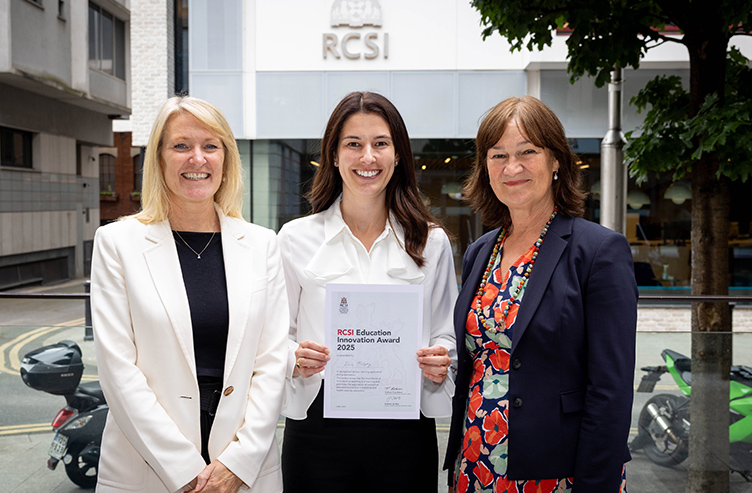
The annual 2025 International Education Forum was a truly collaborative event, bringing together colleagues from Bahrain and Malaysia to explore themes of interpersonal learning and artificial intelligence, with insights from leading voices around the world. The 2025 Education Innovation Award went to Dr Zara Molphy and the team in RCSI’s Department of Obstetrics and Gynaecology for their project ‘Debunking the Myths – The Science Behind Our Sexual Health.’ This initiative is helping Irish teenagers navigate sexual health literacy, break down stigmas and combat misinformation.
As my first year as Deputy Vice Chancellor for Academic Affairs wraps up, I feel incredibly grateful for the dedication of my colleagues and the University’s spirit of collaboration and innovation. Here’s to another year of growth, achievement and making a real difference together!
Honorary Doctorates
RCSI Honorary Doctorates are awarded to those who have made an outstanding contribution to society. Awardees conferred during the year who addressed RCSI conferring ceremonies to inspire our new graduates were:- Professor Mary Dixon-Woods, Director of the HealthcareImprovement Studies (THIS) Institute, University of Cambridge
- Dr Mohamed El-Erian, President of Queens’ College at Cambridge University and the Chief Economic Advisor at Allianz
- Professor Tim Spector, Professor of Epidemiology at King’s College London, best-selling author and co-founder of the ZOE app
- Mary Mitchell O’Connor, former Minister of State for Higher Education