From Early Detection to Personalised Breast Cancer Care

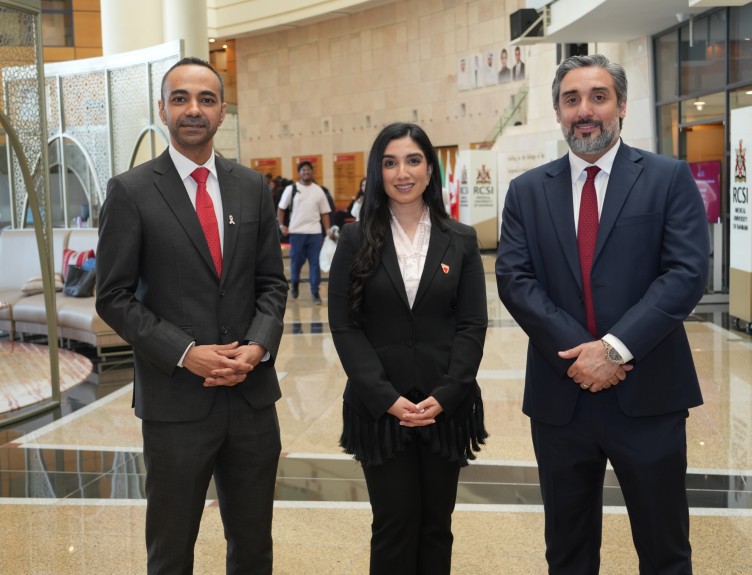
Breast cancer is more than a medical diagnosis. For many women, it is a life-changing experience that affects their physical health, confidence and sense of identity. While advances in treatment have significantly improved outcomes, the journey towards recovery often extends beyond addressing the disease itself. As Breast Cancer Awareness Month concludes, three expert alumni of RCSI Medical University of Bahrain share their insights into the importance of early detection, advances in surgical treatment and the role of personalised care in supporting women throughout their breast cancer journey.
Early detection and accurate diagnosis
Dr Eman Hamza, Consultant General Surgery/Breast Oncoplasty at Royal Medical Services (RMS) (Class of 2011)
Breast screening plays a vital role in identifying cancer at an early stage, often before symptoms develop, when treatment is more likely to be successful. Recognising changes in the breasts, seeking prompt medical advice and participating in age-appropriate screening programmes in accordance with national guidelines are essential steps towards early detection.
When a breast lump or other change requires investigation, diagnosis relies on triple assessment, a step-by-step approach combining clinical examination, breast imaging and, when necessary, a biopsy. Imaging may involve mammography, ultrasound or, in certain cases, magnetic resonance imaging (MRI), while a biopsy allows specialists to examine a small tissue sample. Together, these assessments help establish an accurate diagnosis and guide appropriate treatment planning.
Following diagnosis, a multidisciplinary team considers the cancer's characteristics alongside the patient's overall health and preferences to determine the most appropriate treatment approach. Surgical options may include breast-conserving surgery or mastectomy, depending on individual circumstances.
Advancing treatment through oncoplastic surgery
One of the significant developments in breast cancer surgery is the integration of oncological and plastic surgery techniques. Known as oncoplastic breast surgery, this approach combines cancer removal with procedures designed to preserve or improve the breast's appearance, aiming to achieve effective treatment while maintaining natural shape and symmetry.
Depending on individual needs, surgeons may reshape the breast using existing tissue, use implants or tissue expanders, or reconstruct the breast using tissue or fat from other parts of the body. These techniques are tailored to each patient's diagnosis, treatment requirements and preferences, balancing oncological safety with aesthetic outcomes.Such advances reflect a broader shift towards personalised care, recognising the importance of addressing both the physical and psychological aspects of recovery.
The evolution of breast reconstruction: Restoring confidence and choice
Dr Ahmed Al Haddad, Consultant Plastic and Reconstructive Surgeon (Class of 2010)
Breast reconstruction has evolved considerably, from early attempts to restore breast shape using a patient's own tissue to modern techniques that offer women a wider range of options following mastectomy.
The introduction of silicone breast implants in the 1960s marked an important development, followed by advances in tissue expanders and surgical techniques. Today, implant-based reconstruction may involve placing a permanent implant during a single operation or using a temporary tissue expander before inserting the final implant. The choice depends on the patient's anatomy, overall health and cancer treatment plan.
As a plastic and reconstructive surgeon, I have witnessed how breast reconstruction can positively influence a woman's recovery after mastectomy. Our role extends beyond recreating breast shape to helping patients regain confidence and move forward following cancer treatment.
However, reconstruction is not appropriate or desired for every woman. Some choose to remain flat after mastectomy, and that decision deserves equal respect. The goal is not to define how a woman should look after cancer, but to ensure she understands her options and feels empowered to make her own decision. Successful reconstruction also relies on collaboration between breast surgeons, plastic surgeons, oncologists, specialist nurses and other healthcare professionals. This multidisciplinary approach has been central to the continued development of breast reconstruction services and efforts to expand the options available to women in Bahrain.
Returning to RCSI Medical University of Bahrain to share these insights holds particular significance for me. I joined the University as a medical student in 2004 and graduated from its first cohort in 2010. Returning as a consultant surgeon is both a privilege and an opportunity to reflect on how medical education shapes our professional journeys.
One of the most important lessons I have learned throughout my career is that surgery is not only about technical skill. It is about understanding the person behind the diagnosis, listening to their concerns and helping them regain hope.
Ultimately, breast reconstruction is about much more than restoring physical appearance. It is about restoring choice, dignity, confidence and hope.
Reconstructing with the body's own tissue: Advances in microsurgery
Dr Ali Alhawaj, Consultant Plastic and Reconstructive Surgeon at Salmaniya Medical Complex (Class of 2011)
Alongside implant-based techniques, autologous reconstruction offers women the option of rebuilding the breast using their own tissue. This involves transferring skin and fat, sometimes together with muscle, from areas such as the abdomen, back or thigh to recreate breast shape.
Advances in microsurgery have made increasingly sophisticated procedures possible. One example is the deep inferior epigastric perforator (DIEP) flap, which uses skin and fat from the lower abdomen while preserving the abdominal muscle. Surgeons reconnect tiny blood vessels under a microscope to restore circulation to the transferred tissue.
My interest in supporting women following breast cancer began during my early years of surgical residency and led me to undertake three years of fellowship training in reconstructive microsurgery at University Hospitals Birmingham in the UK.
Working within a high-volume reconstructive service, I had the privilege of learning from experienced surgeons whose mentorship extended beyond technical skills. They reinforced the importance of surgical judgement, responsibility and, above all, listening to each patient.
My involvement in multidisciplinary breast reconstruction meetings and research further deepened my understanding of how reconstructive procedures fit within a woman's wider cancer treatment journey.
While autologous reconstruction can offer a natural breast contour and may avoid permanent implants, it also involves important considerations, including longer operations, recovery requirements and potential complications at the tissue donor site. No single technique is suitable for every patient.
Importantly, reconstruction does not always need to take place immediately. For some women, delayed reconstruction may remain an option years after cancer treatment, depending on their health and individual circumstances.
One message remains central to my approach: Reconstruction is an option—not an obligation.
Every woman has a different experience of recovery. Some may wish to recreate breast shape, while others prefer an external breast form or choose not to undergo further surgery. What matters most is ensuring that each woman understands the possibilities and feels supported in making the decision that is right for her.