Open Access at RCSI Medical University of Bahrain

Someone always pays for knowledge. For a medical university the real question is whether that cost should ever stand between a clinician and the evidence they need.
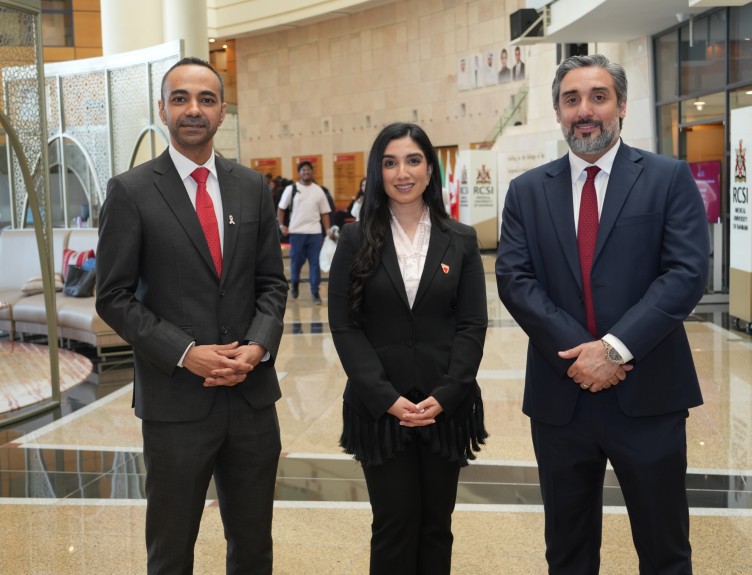
Opinion Piece by Dr Bindhu Nair, Head of Library Services
Open Access (OA) means research is free to read and free to reuse without a subscription. A large-scale analysis in PeerJ1 found that articles with OA status were cited on average 18% more than expected. At RCSI Medical University of Bahrain, this principle aligns closely with our commitment to Respect, Collaboration, Scholarship and Innovation. Open research promotes collaboration by widening access to our researchers' work; supports scholarship by making evidence more discoverable; and encourages innovation by allowing knowledge to move beyond institutional boundaries. Our Library plays an important role in this ecosystem through Open Access guidance, research support and the RCSI institutional repository, which provides an avenue for preserving and sharing eligible research outputs.
OA is not without cost. A subscriber can access a restricted article for free, but a non-subscriber has to pay USD 30-40 for one article. It costs even more to publish OA. The Article Processing Charge (APC) for a prestige journal such as Nature is currently approximately $12,000 per paper2 . Even though institutions pay for journal subscriptions, they may also pay APCs to publish articles. This results in "double dipping" where institutions pay both to read and to publish research.
How do I advise authors who have both high Impact Factors and high APCs? I recommend that they focus on more than just numbers. An Impact Factor may provide one indicator of a journal's influence, not the article. Rigour, peer review quality and reaching the right audience matter equally. When an APC is too expensive, I suggest that authors submit their work to a reliable subscription-based journal and then deposit their work in a repository. In my opinion, this approach gives similar exposure at a much lower cost.
Most undergraduate students in my information literacy sessions recognise OA as "the free papers". However, very few students realise that ‘someone’ has paid for these papers. As long as students encounter a paywall, they perceive an access issue rather than a business model. Many students quickly become strong advocates of open publishing once we discuss the economic principles involved.
Is the RCSI Repository a sustainable alternative? No, it is a valuable complement, but not a replacement for OA. Authors can make their accepted manuscripts available for free under certain publisher guidelines through Green Open Access, the process of self-archiving a manuscript version in a free institutional or subject repository3. The main drawbacks to Green OA are author participation rates and embargo periods. This is why library support for deposit matters.[CD1.1][BP1.2] Librarians can help researchers check publisher policies, identify the permitted manuscript version, understand embargoes and copyright conditions, deposit publications correctly, and make outputs discoverable through the repository.
Diamond OA goes a step beyond. It is funded by institutions, libraries or societies and charges neither authors nor readers. An estimated 17,000 to 29,000 Diamond journals are now publishing 8-9% of all scholarly articles published annually[DM2.1][BP2.2]4. Although stable funding and editorial capacity continue to pose challenges, the basic premise is sound.
The future of OA depends on shared funding models; in the short term, this means moving toward transformative agreements and in the long term, increasing our investments into Diamond Journals and repository systems. This will shift the question from "Who pays for OA and/or the APC?" to "How do we finance research as public knowledge?"
References:
1. Piwowar H, Priem J, Larivière V, Alperin JP, Matthias L, Norlander B, et al. The state of OA: a large-scale analysis of the prevalence and impact of Open Access articles. PeerJ. 2018;6:e4375. doi:10.7717/peerj.4375.
2. Nature. Publishing options [Internet]. London: Springer Nature; [cited 2026 Oct 27]. Available from: https://www.nature.com/nature/for-authors/publishing-options
3. Open-access.network. Green, Gold, and Diamond Open Access [Internet]. Open-access.network; [cited 2026 Oct 27]. Available from: https://open-access.network/en/information/open-access-primers/green-and-gold
4. Mounce R. Reflections on the OA Diamond Journals Study [Internet]. cOAlition S; 2021 Mar 30 [cited 2026 Oct 27]. Available from: https://www.coalition-s.org/blog/reflections-on-the-oa-diamonds-journal-study/