Defining Professional Identities Beyond the Classroom: RCSI Medical University of Bahrain Students’ Experience

By Dr Anthony Friel, Lecturer in Communications – Medical Commencement Programme (MCP) / Academic Lead in Leadership
Medical education is often only associated with lecture theatres, anatomy laboratories and clinical wards. However, some of the most meaningful learning experiences for future doctors can occur within the communities they will ultimately serve. Community engagement provides an important avenue for medical students to begin translating these intentions into action.
Over the past semester, students enrolled in the MCP16: Communications, Culture and Community Context module at RCSI Medical University of Bahrain have been doing exactly that through direct engagement with community and charitable organisations across the Kingdom of Bahrain.
As part of their continuous assessment, student groups partnered with 12 local charities in Bahrain, representing diverse sectors including autism rehabilitation, elderly care, migrant worker protection, animal welfare, Down Syndrome support, orphan care, sustainability initiatives and humanitarian relief.
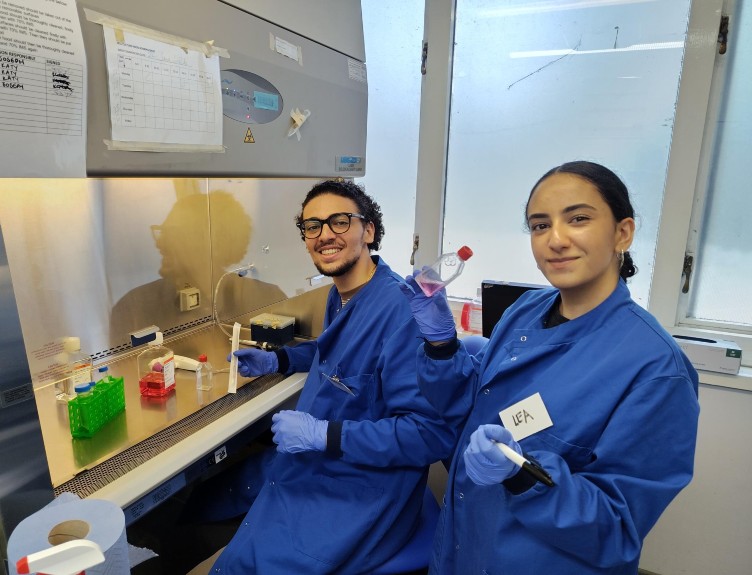
Across the cohort, students conducted site visits and structured observations, allowing them to explore how community organisations operate and the populations they support. Importantly, students actively participated in volunteering activities, including therapy support sessions, elderly engagement programmes, animal care, aid distribution coordination and community outreach initiatives.
Complementing these activities, students also organised fundraising initiatives, including bake sales, clothes donation drives, mini-quizzes and arts-and-craft stalls to support the charitable organisation of their choice.
While these initiatives undoubtedly benefit local charities, they also play an important educational role. Modern medical education increasingly recognises that developing competent physicians requires more than scientific knowledge alone. Early exposure to community environments helps students understand the social determinants of health, the structural challenges faced by more vulnerable populations and the community networks that support health and wellbeing as well as personal development.
Research consistently demonstrates the value of experiential learning in professional education. Kolb’s experiential learning theory proposes that knowledge is created through the transformation of experience, where learners actively engage with real-world situations and reflect on their meaning¹. Similarly, service-learning models in medical education have been shown to enhance empathy, cultural awareness and social responsibility among students².
For future doctors, these experiences also contribute to professional identity formation, the developmental process through which medical students gradually internalise the values, behaviours and responsibilities of the medical profession and begin to “think, act and feel like physicians”3. Encounters with community organisations and social groups faced by various challenges can play a powerful role in shaping this development, helping students recognise that medicine is not solely a clinical endeavour but also a social and ethical commitment 4.
Many MCP16 students reflected on how these experiences broadened their understanding of healthcare within the Bahraini context. Engaging with charities supporting individuals with disabilities, working with elderly residents, or contributing to migrant worker outreach initiatives provided perspectives that cannot easily be replicated in traditional classroom settings.
These initiatives also highlight an important principle of contemporary medical education, that medical schools must remain connected to the communities they serve. Boelen and Woollard argue that socially accountable medical schools should align their education, research and service activities with the health priorities of society5. Partnerships with community organisations represent a practical way of bringing this principle to life.
For our students, these experiences represent an early but important step in their journey towards becoming compassionate and socially responsible physicians. The empathy developed through volunteering; the communication skills practised in real-world environments and the awareness gained about community needs will continue to shape their development throughout medical school and beyond.
At RCSI Medical University of Bahrain, we are keen on making community service a cornerstone of the students’ educational experience and we actively encourage our students to engage meaningfully with the communities around them. Through initiatives like in MCP16, students begin to translate their motivations for entering medicine into tangible actions, laying the foundations for professional identities grounded in service, empathy and social responsibility.
References:
- Kolb DA. Experiential learning: experience as the source of learning and development. Englewood Cliffs: Prentice-Hall; 1984.
- Hunt JB, Bonham C, Jones L. Understanding the goals of service learning and community-based medical education: a systematic review. Acad Med. 2011;86(2):246-251.
- Cruess RL, Cruess SR, Steinert Y. Supporting the development of a professional identity: general principles. Med Teach. 2019;41(6):641-649.
- Wear D, Zarconi J. Can compassion be taught? Let’s ask our students. J Gen Intern Med. 2008;23(7):948-953.
- Boelen C, Woollard R. Social accountability and accreditation: a new frontier for educational institutions. Med Educ. 2009;43(9):887-894.