Event

RCSI Alumni Fellows and Members Lunchtime Talk with Prof. Raymond Stallings

  • Date: 01 October 2026
  • Time: 12:30 - 14:00
  • Category: Alumni
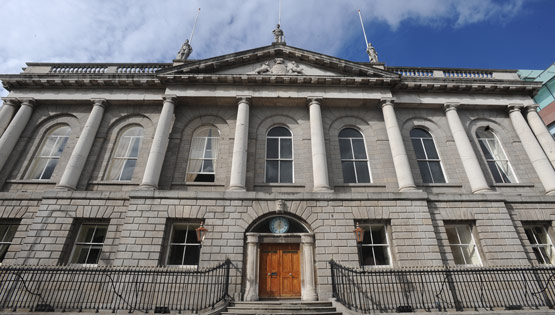
  • Location: RCSI Dublin, Professor Chee Thong Seminar Room, 118 St Stephen's Green, Dublin 2

The Alumni, Fellows and Members team are delighted to announce that registration is open for our third lunchtime talk of 2026, which will take place on Thursday, 1 October in the Professor Chee Thong Seminar Room, RCSI, 118 St Stephen's Green.

We are looking forward to welcoming Professor Raymond Stallings, Emeritus Professor of Cancer Genetics, RCSI, to present a talk entitled ‘From Graveyard to Sanatorium: Disease, Death and Public Health in Ireland 1876 – 1941’. 

About Professor Stalling

Professor Stallings is a geneticist and genomics researcher whose career has spanned more than four decades, from the Human Genome Project to cancer genomics, microRNA biology and, more recently, archaeology and medical history. After receiving his PhD from the University of Texas MD Anderson Cancer Center, he joined the Los Alamos National Laboratory, where, during the formative years of the Human Genome Project, he helped construct one of the first comprehensive physical maps of a human chromosome.

In 1995, Stallings moved to Ireland as Chief Cytogeneticist at the National Centre for Medical Genetics. He later became Professor of Cancer Genetics at RCSI, where his internationally recognised research focused on the genomic and epigenetic basis of neuroblastoma. He also served as RCSI’s Director of Research and Innovation, leading the institutional research strategy.

Over the course of his career, he produced more than 190 publications that received over 19,000 citations and attracted approximately €14 million in research funding. Since retiring, he has pursued archaeology, historical demography and medical history, investigating mortality, disease, social inequality and public health in 19th and early 20th century Ireland.  


About the talk 

A medieval graveyard in Lucan provides an unusual window into patterns of disease, mortality and public health during a period of profound change in Ireland. Drawing on burial registers, civil records, census returns, newspapers and local government archives, this talk reconstructs the experiences of a community living on the rural outskirts of Dublin between 1876 and 1941.

The records reveal a population in which childhood mortality and infectious disease were major features of life in the late nineteenth century. Tuberculosis was particularly important, frequently affecting children and young adults. Yet over the following decades a striking demographic transition occurred: childhood mortality declined sharply and survival into adulthood improved, much of it before the introduction of effective curative medicine.

The talk explores this transformation alongside the emergence of organised local public health after the Local Government (Ireland) Act of 1898. Rural District Councils and Boards of Guardians confronted problems of sanitation, water supply, infectious disease and medical care, while tuberculosis increasingly became the focus of coordinated intervention. The story culminates with the establishment of Peamount sanatorium near Lucan and the extraordinary local controversy that surrounded it. Together, these sources show how the experiences of one small community reflected much broader changes in disease, medicine and public health in Ireland during the late nineteenth and early twentieth centuries.

The talk will begin at 12:30pm, with tea and coffee to follow.

Upcoming events