RCSI unveils Beatha, a landmark sculpture exploring the interconnection of human health and the natural world

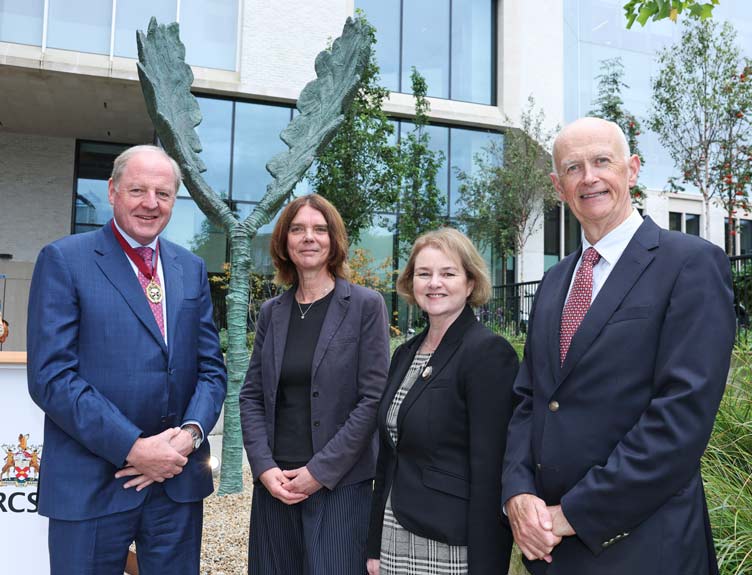
RCSI University of Medicine and Health Sciences has unveiled Beatha, a major new public sculpture by Irish artist Rachel Joynt, at its landmark campus development at 118 St Stephen’s Green.
Inspired by the forms of an oak sapling and the human lung, the sculpture explores the essential relationship between human life and the natural environment, reflecting RCSI’s commitment to advancing health and well-being.
Emerging from the courtyard paving, the sculpture’s distinctive, lobed form and branching veins evoke the structure of human lungs, creating a striking visual connection between the processes that sustain plant life and those that sustain the human body.
At almost four metres in height and balanced on a stem, the bronze sculpture required engineering expertise. The artist worked with Nicholas O’Dwyer consultants and used scanning and 3D printing to bring her vision to life. Working closely with the CAST foundry in the Liberties, Rachel Joynt had Beatha cast in separate sections, which were then assembled and welded together. A patination process created its green colour, suggestive of chlorophyll.
Created for the landscaped courtyard connecting 118 St Stephen’s Green and 26 York Street, the sculpture offers a contemplative focal point within RCSI’s busy campus. Its placement invites students, staff and visitors to pause and reflect on the interdependence of human health and environmental well-being.
The sculpture also draws on the legacy of Sir Charles Cameron, former RCSI President and Medical Officer of Health for Dublin in the late 1800s, whose contributions to environmental cleanliness and public health inform approaches to health and well-being today. The sculpture’s location beside St Stephen’s Green, one of Dublin’s most significant green spaces, reinforces the connection between urban nature, clean air and public well-being.
Professor Cathal Kelly, RCSI Vice Chancellor, said: “As a permanent feature of the RCSI campus, Beatha will invite future generations of students, staff and visitors to discover new connections between art, science and the living world. Within this setting, Beatha offers a lasting reminder that health extends beyond the individual body.
"By bringing together the imagery of the oak tree, the human lung and the cycles of nature, the sculpture encourages a broader understanding of well-being as something shaped by the environments in which people live, learn and work. I am grateful to the RCSI Art Committee for their hard work and support, which helped to bring Beatha to life and make this meaningful addition to the RCSI campus a reality."
Speaking about Beatha, Rachel Joynt said: "The sculpture takes its name from the Irish word for 'life' and, phonetically, Beatha also evokes the word 'breath', emphasising respiration as a shared process linking people and the natural world. Beatha is an optimistic artwork for this courtyard, and I’m pleased to know that it resides at the heart of such important health innovation and learning."
Rachel Joynt, a member of both the Royal Hibernian Academy and Aosdána, has developed a distinctive practice in site-specific public sculpture over more than three decades. Her work frequently draws on natural forms, exploring themes of life, ecology and the relationship between people and their surroundings.
The unveiling of Beatha adds a significant artistic dimension to 118 St Stephen’s Green, RCSI’s major education, research and public engagement development. Connected to the institution’s facilities at 26 York Street, the building provides new spaces for teaching, interdisciplinary research and public engagement, including Humanarium, RCSI’s free exhibition space dedicated to health and well-being.
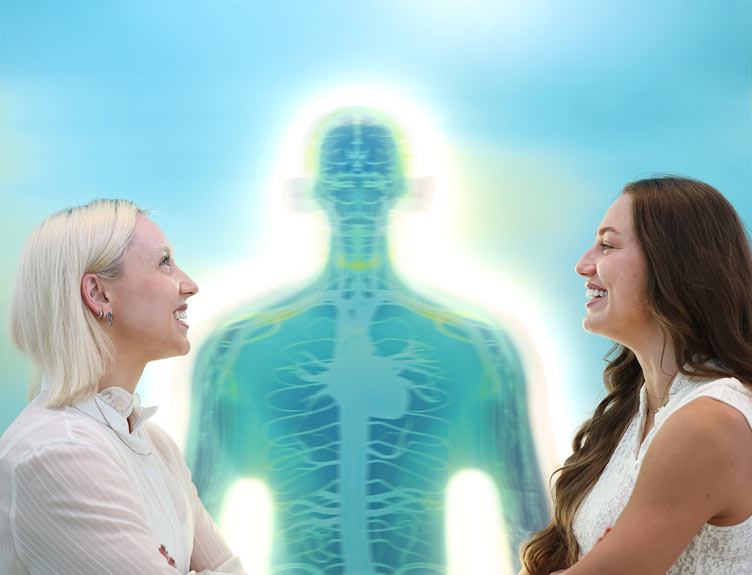
The unveiling of Beatha coincides with the launch of Breathe, a new public exhibition in RCSI's Humanarium exploring respiratory health and the way in which breathing shapes the body and mind.
You can learn more about arts and cultural heritage at RCSI here.