Stock image of a psychiatric nurse during a consultation)

Overseas Aptitude Test – Psychiatric Nurse


Faculty of Nursing and Midwifery

Test preparation

The test is designed to reflect the nature of the syllabus and knowledge required for a pre-registration programme in the Republic of Ireland as per the NMBI standards and requirements.

The test addresses the NMBI domains of competency for the pre-registration programme in an attempt to ensure patient safety and public protection. The domains of competency and indicative content of the NMBI requirements and standards must be fully and carefully considered in order to help guide your revision for the test. 

In your revision, based on the NMBI standards and requirements, multiple sources should be considered including your notes and textbooks from your own training but be sure to use the most up-to-date research-based sources. Essential minimum background reading is detailed below. All of the references below will be included throughout the OSCE stations. Before presenting for the test, an applicant must know how to complete and interpret/analyse each piece of documentation as included below. 

Please note: RCSI does not approve or acknowledge any preparation or review sessions/courses/programmes for the test.

In preparation for the test, it is essential that you base your revision on the NMBI publication: NMBI (2016) Nurse Registration Programmes Standards and Requirements. 4th edition. Refer pp 95-110.

Please note: You are encouraged to check this webpage on a regular basis for additions and updates regarding revision and preparation.

 

Introduction to the legal statutes, policies, governance and regulations that inform the provision of mental health services in Ireland

Assessment

Diseases and condition

Cardiac-vascular

Chronic disease management

Current examples for this OSCE station (may be added to): Angina; Atrial fibrillation; Heart failure; Stroke; Diabetes type 2; Asthma; COPD; Metabolic syndrome.

Deconditioning

Delirium

Dementia

Diabetes (type 1 and 2)

Electro-convulsive therapy (ECT)

Falls

Frailty

Fundamentals of nursing care

Current examples for this OSCE station (may be added to): Falls; Intake including MUST; Skincare including pressure areas; Urinary elimination including related clinical procedures.

Health, policy, and professional matters

The references in this section underpin all the OSCE stations.

Infection prevention and control, and waste management

Medical preparations

Medical preparations list for OSCEs

Updated 23 January 2026 until further notice. Each medical preparation must be studied in line with the Professional Standards Guidance for Registered Nurses and Midwives on Medication Administration (2020); Regulation 23 (Ordering, Prescribing, Storing and Administration of Medicines) of the Mental Health Commission: Judgement Support Framework (Version 6.1 January, 2025, (pp. 28-29); and the most recent edition of the British National Formulary (BNF).

Sample medical drugs

  1. ACE inhibitor: (oral preparation)
  2. Acetylsalicylic acid (oral aspirin preparation)
  3. Amoxicillin (oral preparation)
  4. Angiotensin-2 receptor blockers (oral preparation)
  5. Atorvastatin (oral preparation)
  6. Beta blockers (oral preparation)
  7. Beclomethasone (inhaler)
  8. Calcium channel blockers (oral preparation)
  9. Clopidogrel anti-platelet (oral preparation)
  10. Furosemide (oral preparation)
  11. Glyceryl trinitrate (spray)
  12. Lactulose (oral preparation)
  13. Metformin (oral preparation)
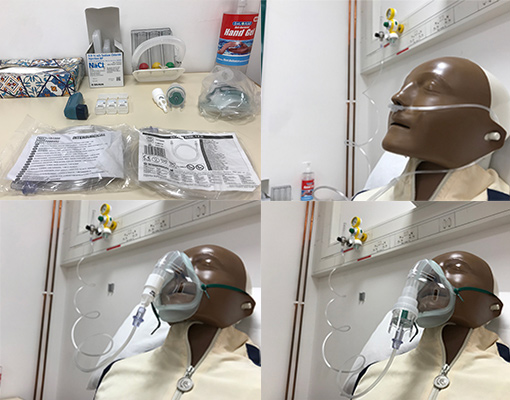
  14. Oxygen administration (via mask and nasal canula)
  15. Ranitidine (oral preparation)
  16. Salbutamol (inhaler)
  17. Salmeterol/fluticasone propionate (inhaler)

Sample psychotropic medications groups

Anti-depressants

  1. Inhibitors of monoamine uptake:
    – Selective serotonin (5-HT) reuptake inhibitors: fluoxetine/sertraline
    – Tricyclic antidepressants (TCA): amitriptyline
    – Mixed 5-HT and noradrenaline reuptake inhibitors: venlafaxine
    – Noradrenaline reuptake inhibitors: reboxetine
    – Monoamine receptor antagonists: mirtazapine

Anti-psychotics

  1. First generation: chlorpromazine
  2. First generation: haloperidol
  3. Second generation (atypical): clozapine
  4. Second generation (atypical): olanzapine
  5. Second generation (atypical: risperidone
  6. Second generation (atypical): aripiprazole

Anxiolytics

  1. Short acting: lorazepam
  2. Medium acting: alprazolam
  3. Long acting: diazepam

Mood stabilisers

  1. Lithium carbonate
  2. Lamotrigine

Anti-cholinergic

  1. Procyclidine

Anti-epileptic/anticonvulsants

  1. Phenytoin sodium
  2. Carbamazepine
  3. Sodium valproate/valproic acid
  4. Levetiracetam

Neurological

Nursing process in the acute situation

Current examples for this OSCE station (may be added to): Diabetes type 1; Neuro-vascular assessment; Delirium; Deep vein thrombosis; Acute urinary tract infection; Stoma; Delirium; Post-operative bleed.

Nutrition/malnutrition

Observations

Older person care

Reflection

Renal

Respiratory

Safeguarding and related matters

The references in this section underpin all the OSCE stations.

Sepsis

Skin

Social prescribing

Stoma

Teaching the junior student nurse

Current examples for this OSCE station (may be added to): Helicobacter pylori ulcer and gastroscopy; Osteoporosis and osteopenia and Dexa-scan; Constipation and colonoscopy; Lung cancer and bronchoscopy; Hypertension and ambulatory blood pressure monitor (ABPM); Obesity and BMI and waist circumference; Pre and post-operative care and pre-operative assessment.

Directed mental health nursing reading which underpins and applies to all OSCE stations

  • Hinkle J.L. Ceever K.H. (2014) – Brunner & Suddarth's Textbook of Medical – Surgical Nursing (13th edition): Lippincott Williams & Wilkins Wolkers Kluwer Health
  • Lister, S., Hofland, J., Grafton, H. (2022) – The Royal Marsden Manual of Clinical Nursing Procedures (10th edition): Chichester, Wiley Blackwell
  • Peat, I.(ed.) (2024) – Alexander's Nursing Practice: Hospital and Home (6th Edition): London, Elsevier
    Section 1: Care of Patients with Common Disorders
    – 2. Nursing Patients with Cardiovascular Disorders
    – 3. Nursing Patients with Respiratory Disorders
    – 4. Nursing Patients with Gastrointestinal, Liver and Biliary Disorders
    – 11. Nursing Patients with Disorders of the Nervous System
    – 6. Nursing Patients with Diabetes Mellitus
    – 23. Tissue Viability and Managing Chronic Wounds
    – 30. Care and Rehabilitation of People with Long-Term Conditions
    Section 2: Core Nursing Issues
    – 19. The Deteriorating Patient, Recognising and Managing Shock
    Section 3 Nursing Specific Patient Groups
    – 26. Nursing the Patient Who Experiences Trauma
    – 28. Nursing the Critically Ill Patient
  • Halter, M.P. J. (2022) – Varcarolis' Foundations of Psychiatric-Mental Health Nursing (ninth edition): St Louis, Missouri, Elsevier
    – Chapter 7: The Nursing Process and Standards of Care: Psychosocial Assessment
    – Chapter 9: Therapeutic Communication
    – Chapter 12: Schizophrenia Spectrum Disorders: Working with an Aggressive Patient
    – Chapter 15: Anxiety and Obsessive-Compulsive Disorders: Chapter Review
    – Chapter 16: Trauma, Stressor-Related, and Dissociative Disorders: Evaluation
    – Chapter 24: Personality Disorders: Teamwork and Safety
    – Chapter 25: Suicide and Non-suicidal Self-Injury: Evaluation

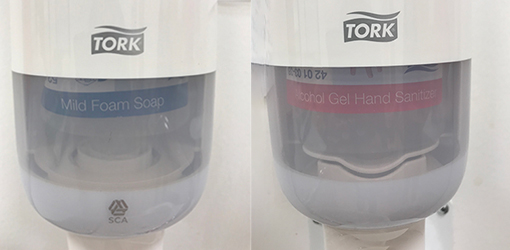
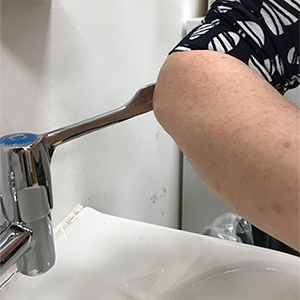
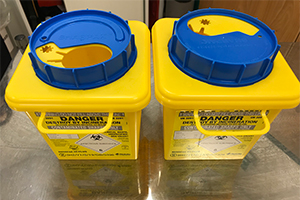
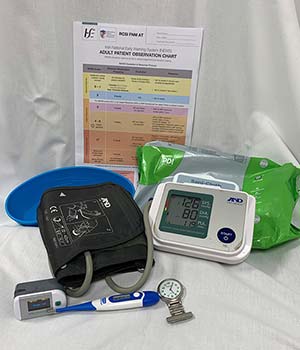
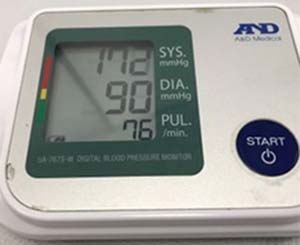
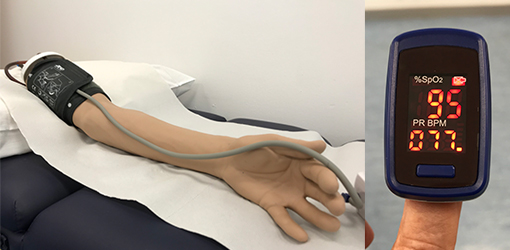
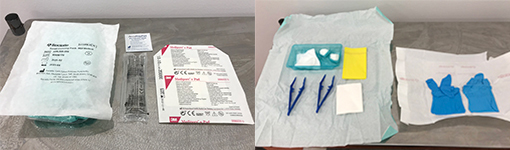
Each station has specific equipment, which must be used as part of the care at that station. If something is not at the station, then it does not need to be used as part of the care at that station.

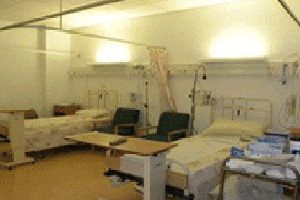
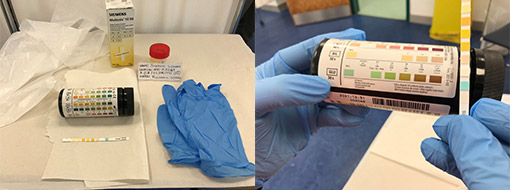
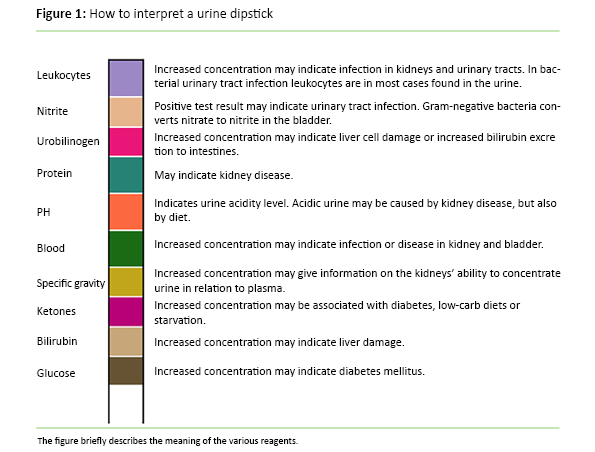
Sample equipment and photographs of OSCE stations are available below.

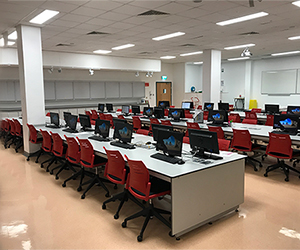
Test venue

Theory test room

Sample practical test room

Hand soap and hand gel

Elbow tap

Sharps bins: open and closed lids

Observations

Observations

Dressing


Respiratory

Watch video 1

Watch video 2

Urinalysis

Urinalysis