Conference
This year's RCSI Medical Professionalism Conference – Professionalism in Healthcare: Education, Experience and Example – took place on Friday, 15 May 2026.
The conference brought together a distinguished international panel of experts to explore the evolving landscape of professionalism in healthcare. The event was delivered in a hybrid format, enabling participants to join in person at RCSI Dublin or online from anywhere in the world, ensuring broad access to a day of insight, reflection, and shared learning in the field of medical professionalism.
The conference also explored the evolving role of professionalism across healthcare education, clinical practice, and leadership, highlighting both evidence-based insights and real-world experiences.
The programme featured an esteemed international panel of speakers, including:
- Dr Rachel Clarke – Palliative Care Doctor and award winning author (The Story of a Heart, Dear Life, Breathtaking, Your Life in My Hands)
- Dr Suzanne Crowe – Medical Council of Ireland
- Professor Barry McGuire – RCSI Professor of Postgraduate Surgical Education and Academic Development; Consultant Urological Surgeon
- Dr Laura Golding – Schwartz Rounds Lead Mentor, Schwartz Center for Compassionate Healthcare, Boston, USA
- Dr Ramesh Mehay – Royal College of General Practitioners
- Professor Tim Dornan – Queen’s University Belfast and Maastricht University, Netherlands
- Professor Patricia Harris – Ulster University
- Mr Stephen Teap – CEO of Cork ARC Cancer Support House
Download the Professionalism in Healthcare event programme here.
You can follow us on BlueSky and use the hashtag #MedProf26 to join our online conversations.
Speakers
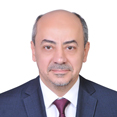
Dr Mohamed Al-Eraky is Associate Professor and Chairman of the Medical Education Department at the College of Medicine and Health Sciences at the Arabian Gulf University, Bahrain.
He is also a Guest Faculty at the School of Health Professions Education (known as SHE) of Maastricht University, in the Netherlands. Dr Al-Eraky is a physician who has concluded his Master’s in Medical Education from Dundee University and then a PhD in HPE from Maastricht University.
Over the past 20 years, Dr Al-Eraky has been engaged in the foundation, planning, tutoring, management and reaccreditation of seven master’s and PhD programmes in medical education, and he has contributed to the supervision and assessment of more than 90 postgraduate students in different contexts.
His research interests include medical professionalism, faculty development, and students’ assessment. Dr Al-Eraky published different conceptual models and frameworks that are being used in various postgraduate programmes.

Dr Abdelsalam Ben Saaud is Academic Lead in Postgraduate Medical Education at RCSI and programme lead of Ireland’s and Europe’s first MSc/PgDip in Professionalism in Medicine and Health Sciences. His work advances medical professionalism, ethics, and postgraduate training in response to the complexities of modern healthcare through innovative curriculum design and rigorous assessment.
He is a cardiovascular physician with training in Emergency Medicine and Cardiovascular and Endovascular Medicine, and holds a MSc in Preventive Cardiology and a PhD from the University of Galway. His clinical background informs his teaching in acute care, ethical decision-making, and high-acuity clinical practice.
At RCSI, he leads the integration of professionalism, human factors, and patient safety across postgraduate medical education, aligning curricula with international regulatory and professional standards, including the Irish Medical Council, General Medical Council, and CanMEDS. He incorporates high-fidelity simulation-based and case-based learning to enhance professional competence, team performance, and authentic clinical practice.

Dr Rachel Clarke is an NHS palliative care doctor and the author of multiple The Sunday Times bestselling books about medicine. The most recent of these, The Story of a Heart (2024), tells the story of a heart transplant that changed UK legal history. It was chosen as a BBC Radio 4 Book of the Week and has been shortlisted for the 2024 Baillie Gifford Prize and won the 2025 Women’s Prize for Non-Fiction.
Breathtaking (2021) was adapted into a major television series, broadcast on ITV in 2024. It reveals how Rachel and her colleagues confronted the height of the COVID-19 pandemic. Dear Life (2020), depicting her work in an NHS hospice, was shortlisted for the 2020 Costa Biography Award, long-listed for the 2020 Baillie Gifford Prize and chosen as a BBC Radio 4 Book of the Week.
Before going to medical school, Rachel was a broadcast journalist. She produced and directed current affairs documentaries focusing on subjects such as the Iraq War and the civil war in the Democratic Republic of Congo. She continues to write regularly for The Guardian, The Sunday Times, New Statesman and Lancet among others, and appears regularly on television and radio.
Inspired by a visit to Ukraine during the conflict in late 2022, Rachel founded a UK-registered charity, Hospice Ukraine, which support the work of local palliative care teams in Ukraine.

Dr Suzanne Crowe was first elected to the Medical Council in 2018 and re-elected in 2023. Dr Crowe was elected as President of the Medical Council in 2021.
Dr Crowe graduated in Medicine from Trinity College Dublin, followed by Specialist training in Anaesthesia and Intensive Care Medicine with the College of Anaesthesiologists.
After a Fellowship in Paediatric Intensive Care Medicine in the Royal Children’s Hospital Melbourne she took up a consultant post in Anaesthesia with a special interest in paediatrics in Tallaght Hospital, Dublin.
In 2014 Dr Crowe moved to Children’s Health Ireland Crumlin Hospital as a Paediatric Intensivist. She is a Senior Lecturer in Paediatrics in Trinity College Dublin and has an interest in bereavement studies and medical ethics.
She is Associate Clinical Professor in UCD School of Medicine in the division of Women and Children’s Health. Dr Crowe is a board trustee for three charities, the Down Syndrome Centre, Cheshire Ireland and LGBT Ireland. Dr Crowe is Chair of the National Screening Advisory Committee.
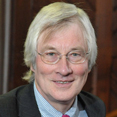
Tim Dornan is a former internist and endocrinologist, who became involved in health professions education during a period of curriculum change in Manchester University, UK.
In mid-career, he completed a masters and PhD in medical education, both at Maastricht University, where we was later a professor. His most recent appointments were in Queen's University Belfast, where he is Emeritus Professor, and Semmelweis University, Budapest, Hungary, where is Honorary Visiting Professor.
His main interest is in workplace learning, with a particular focus on the medical student phase. In retirement, he continues to explore the complexity of (clinical and educational) practice and its implications for medical education. He is a musician and photographer.

Anthony Friel is a lecturer in communications, culture and leadership at RCSI Medical University of Bahrain, with more than two decades of experience in higher education and a sustained focus on Work-Integrated Learning (WIL). His teaching, leadership and research explore how academic curricula, assessment practices and workplace supervision intersect in shaping students’ professional learning.
Anthony holds a Doctorate in Education (Leadership, Learning and Policy) from the University of Bristol alongside a postgraduate qualification in philosophy. He previously spent six years at Bahrain Polytechnic, where he coordinated WIL in the Web Media Department and worked closely with industry partners across digital marketing and entrepreneurship contexts. His professional background also includes leading a digital marketing consultancy and managing communications functions in industry, giving him a strong practitioner perspective on employability and workplace learning.
His research interests include WIL, educational assessment, higher education research, Cultural-Historical Activity Theory (CHAT), teaching pedagogy, communications and culture, and leadership.

Dr Laura Golding is a Schwartz Rounds Lead Mentor for the Schwartz Center for Compassionate Healthcare, USA. She is an experienced Schwartz Rounds facilitator, mentor and trainer.
She studied and trained as a clinical psychologist in the UK. She worked in the UK’s National Health Service in the North West of England as a Consultant Clinical Psychologist, in community services for adults with intellectual disabilities, and then as a clinical academic at the University of Liverpool for the Doctorate in Clinical Psychology programme.
In 2015, Laura led a team that brought Schwartz Rounds to the University of Liverpool, as a pilot, for students training in nine different healthcare disciplines. This led to the Schwartz North project, led by Laura and her team at the University of Liverpool, enabling nine HEIs in the North of England to run interprofessional Schwartz Rounds with healthcare students. Laura became the Point of Care Foundation’s (PoCF) Schwartz Rounds in Higher Education Lead in January 2022 and worked with the PoCF until the charity’s closure in December 2025.
Laura holds an honorary position with the University of Liverpool, has published in a number of peer-reviewed journals and is the author/co-editor of three academic text books.

Professor Denis Harkin, is a Consultant Vascular Surgeon and Chair of Medical Professionalism, and leads the Centre for Professionalism in Medicine and Health Sciences at RCSI University of Medicine and Health Sciences.
He has extensive experience of curriculum design, teaching, assessment and educational research. He is the founder and Director of the RCSI Masters in Healthcare Professionalism and Ethics Programme. He has published over 150 articles on areas of interest in vascular surgery, professionalism and education. He is the host of the popular RCSI Professionalism Matters Podcast series.
He is a Consultant Vascular Surgeon with an international reputation in research and practice in vascular trauma and complex endovascular aneurysm care. He has experience of medical management as Clinical Lead, Training Programme Director and Assistant Medical Director at Belfast HSC Trust, the largest integrated Health and Social Care Trust in the UK. He has been a founding member of the Specialty Advisory Committee for Vascular Surgery, and past elected Council of the Vascular Society of Great Britain and Ireland. He is an Examiner for Intercollegiate FRCS Vascular and European Board of Vascular Surgery.
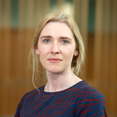
Deputy Head of School of Medicine, Ulster University, Patricia has held a number of academic leadership roles in health and medical schools across the UK, spanning admissions and widening participation, professionalism, academic support, interprofessional education, student experience, quality assurance, curriculum design including assessment and validation and accreditation with a range of PSRBs.
Her expertise is in the review and development of educational strategy, academic policy, process and governance to improve outcomes and experience. Of particular interest to the current audience will be, the establishment and operationalisation of fitness to practice and professionalism policies and procedures for a new medical school in a world of increasing diversity, shifting social and cultural norms and where AI is reshaping what it means to ‘know’.
Patricia is passionate about widening access to the medical profession and how this could/should influence policy and practice.
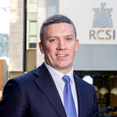
Professor Barry McGuire is a Consultant Urological Surgeon at St Vincent’s University Hospital, Dublin, and Dean of Postgraduate Surgical Education and Academic Development at RCSI.
He completed a Prostate Cancer Research Fellowship with Dr William Catalona at Northwestern Memorial Hospital (2009–2010), followed by an Endourological Society Fellowship in Robotic and Minimally Invasive Surgery at Northwestern Memorial Hospital under Dr Robert Nadler and Dr Kent T. Perry.
His clinical practice focuses on upper urinary tract robotic surgery for kidney cancer and complex urinary tract reconstruction. He established the robotic surgery programmes at St Vincent’s University Hospital and St Vincent’s Private Hospital.
Professor McGuire directs a European Association of Urology Robotic Urology Section (ERUS) – accredited fellowship programme and serves on faculty for ERUS and the EAU, delivering the annual Advanced Robotic Surgery course at the EAU Congress.
As Dean of Postgraduate Surgical Education at RCSI, he leads national surgical education strategy across specialties, overseeing technical and non-technical skills training, examination standards, simulation, and postgraduate academic programmes.
He chaired the development of Ireland’s National Best Practice Policy for Robotic Surgery and led the introduction of a national robotic surgery curriculum for Irish trainees. He also established a dedicated robotic training and research centre at RCSI, supporting multi-platform robotic education and assessment.

Dr Ramesh Mehay is a UK GP, educator, former Senior Lecturer at University of Leeds, and former GP training programme director with over 25 years’ experience in medical education.
He is the founder of Bradford VTS, one of the UK’s most widely used free online learning resources for GP trainees and trainers. He is also editor of The Essential Handbook of GP Training and Education, regarded by many as a foundational text for GP educators in the UK.
Ramesh is passionate about professionalism, human factors, communication, and creating psychologically safe learning cultures in healthcare. He is known for delivering engaging, practical, and thought-provoking teaching that combines educational theory with real-world clinical experience.

Dr Áine Ryan is a lecturer at the RCSI Centre for Professionalism in Medicine and Health Sciences. She holds a PhD in Population Health and Health Services Research from RCSI, a Master’s degree in Neuromusculoskeletal Physiotherapy from UCD, and a Postgraduate Diploma in Health Professions Education from RCSI.
After graduating with a BSc in Physiotherapy, she spent ten years in clinical practice across two Dublin teaching hospitals and private practice, where she held senior posts in Musculoskeletal Outpatients, Rheumatology, Pain Management, and Orthopaedic Triage. In 2013, she returned to academia as an HRB SPHeRE PhD Scholar, focusing on multimorbidity and the impact of physical activity on health outcomes.
Before joining the Department of Medical Professionalism as a Postdoctoral Fellow in 2019, Dr Ryan was a lecturer in the RCSI School of Physiotherapy, with responsibility for teaching, learning, and assessment across all years of the programme. She has since led and co-developed the PILLAR Study, a longitudinal project examining professionalism, leadership, and resilience among RCSI medical students.
She now shares responsibility for professionalism teaching, learning, and assessment in the new undergraduate medical curriculum, the Transforming Healthcare Education Programme (THEP). She has also collaborated on the development of the MSc/Postgraduate Diploma in Professionalism in Medicine and Health Sciences. She was invited to join the THEP Scholarly Group in order to support research and evaluation of the new medical curriculum at RCSI.
Dr Ryan has served on the Board of the Irish Society of Chartered Physiotherapists as Director of Professional Development and chaired its Professional Development Standing Committee. Her research interests include professionalism, health professions education, open disclosure and the ethical use of AI in medicine. She was a co-investigator in the HEA-funded PROPER Study which examined best practice in medical professionalism education.

Dr Asil Sadeq is a Postdoctoral Research Fellow in Medical Professionalism at the Royal College of Surgeons in Ireland, where she leads and contributes to a range of research projects and international collaborations. Her work spans medical professionalism, health services research, pharmacy practice, and academic development, bringing together multidisciplinary expertise with both scientific rigour and human‑centred insight.
With a background in Pharmacy and a PhD in Pharmacy Practice and Health Services Research from Trinity College Dublin, Dr Sadeq brings a strong foundation in medicines management, interprofessional collaboration, and evidence‑based practice. Her earlier clinical experience as a registered pharmacist in the UAE, combined with technical expertise in multicentre Delphi studies, complex interventional research, and cross‑institutional partnerships, informs her commitment to advancing assessment, curriculum design, and evidence‑based educational practice that shapes how future clinicians learn, behave, and deliver care.
Her leadership extends to supervising undergraduate and postgraduate students across RCSI Dublin and Bahrain, managing ethics submissions, and supporting curriculum integration and assessment within medical programmes. She is also actively involved in producing high‑impact academic outputs that contribute to the evolving landscape of medical training and practice.

Stephen Teap is a dedicated healthcare advocate and patient representative whose journey began amid Ireland's Cervical Check scandal, following the tragic loss of his wife Irene to cervical cancer in 2017. As CEO of Cork ARC Cancer Support House, he leads an essential organisation providing free, confidential services, including counselling, complementary therapies, support groups, education workshops, and holistic care to cancer patients and families across Cork.
Motivated by the Cervical Check debacle, Stephen campaigned vigorously for accountability, transparency, patient rights, and systemic healthcare reforms, transforming personal grief into a powerful voice for change.
At Cork ARC since 2024, Stephen raises awareness to secure vital funds for the charity while advancing the organisation's core services, counselling, complementary therapies, support groups, education workshops, and holistic care, ensuring emotional, practical, and wellness support reaches those affected.
He also chairs the board of a Cork hospital, applying extensive board expertise to advance strategic healthcare governance and delivery.

Dr Sarah Townley is the Deputy Medical Director at MPS, and a board member for the MPS Foundation.
Prior to joining MPS in 2009, Sarah studied medicine at Leeds University, and then worked as a general practitioner. During her time at MPS Sarah has undertaken various roles including Medicolegal Consultant and Underwriting Policy Lead.
Sarah has also gained a Diploma in Legal Medicine, Membership of the Faculty of Forensic and Legal Medicine and an CII Certificate.
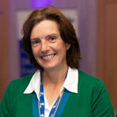
Sharon qualified as a registered general nurce and held several positions at the Adelaide Hospital, Tallaght University Hospital and St James’s Hospital before moving to the HSE, National Clinical Strategy and Planning Directorate as National Programme Manager.
In addition to a BSc (Hons) and MBA, Sharon has a MSc in Medical Ethics and Law, a Professional Diploma in Corporate Governance and is a Black Belt in Lean/6 Sigma.
She has held the posts of Deputy CEO/COO Tallaght University Hospital, CEO of LauraLynn, Ireland’s Children’s Hospice and Director of the All-Ireland Children’s Cardiac Network before taking up her current position as CEO of Bon Secours Hospital, Dublin.