Anil Sivakumar
I had my mind set on medicine since I was a kid. Having completed a biological science degree in the UK, I loved how this programme gives the opportunity to make international connections and develop the clinical skills early on.
The Graduate-Entry Medicine programme at RCSI is a 4-year accelerated programme of the classical 5/6-year medical degree, with both awarding the same Honours Degrees of Bachelor of Medicine, Bachelor of Surgery, Bachelor of Obstetrics (MB, BCh, BAO) and LRCP and SI.
My first year was primarily based at the Mercer building and main RCSI campus. It was largely theory-based, assessed continuously by multiple-choice tests, short-answer core exams, and workshops. There were 5 modules per semester, covering bioscience, bioethics, public health, musculoskeletal biology and core physiology, such as gastrointestinal, cardiorespiratory, genitourinary and nervous system biologies, haematology, immunology, hepatology and endocrinology.
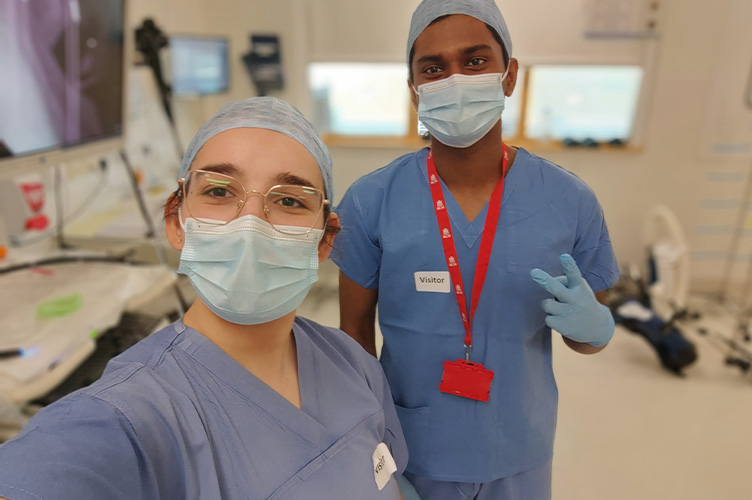
As part of the year-long Medicine and Surgery module, there were clinical skills sessions weekly to develop and fine-tune history-taking and examination skills with patient actors, assessed by a formative OSCE in Semester 1 and a summative OSCE in Semester 2. It was quite daunting at first to be expected to perform these skills in the span of a few months, but was 100% possible with the help of friends and family. Patient interaction was limited to weekly clinical placements in Semester 2 and the subsequent month of placements after exams, but I loved how we got to be in hospital so early on compared to other GEM programmes in Ireland. Receiving advice from GEM2-led tutorials and peer mentors definitely reassured me for this content-heavy year.
Anatomy for the entire programme was covered this year, and super cool to have dissections twice nearly every week. There was also the opportunity for students to have a taster of specialties or participate in EDI training outside the Year 1 curriculum with Student Choice Week.
My favourite module would have to be the Medicine and Surgery module that involved developing my history-taking and examination skills through workshops and clinical placements. While the first year for a graduate-entry medic is an information overload with all the physiology, anatomy and pathology we are expected to know, it’s a breath of fresh air to have a clinical module like this to remind us of what we are eventually working towards.
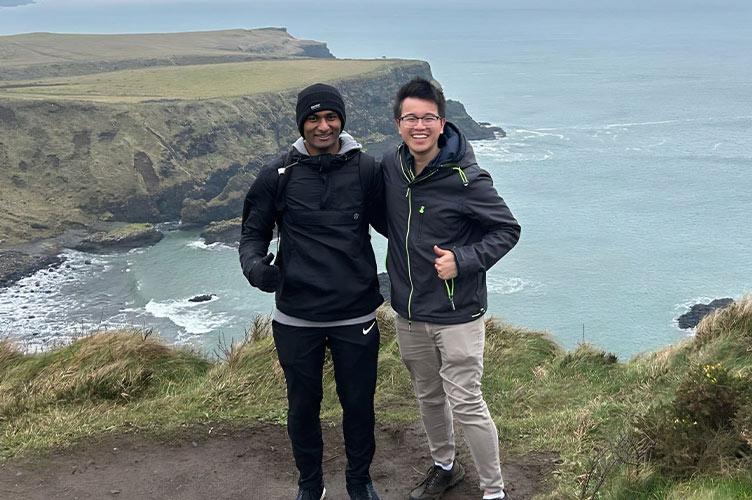
There are so many great memories from my time in RCSI so far, but one that stands out was the Traveller’s Talking module I took for student choice week. It involved a fun and insightful trip to Derry to collaborate with GEM students from the University of Ulster and furthered my understanding of the Irish Travelling community and how to help disadvantaged groups like them as a physician. In terms of my future plan - I went into this programme believing General Practice was my calling, but having kept my mind open and experience placements, I recently found interest in Orthopaedics. I am also curious about Sport and Wilderness Medicine right now. However, this could all change!
Anil Sivakumar, Graduate Entry Medicine