Sylvia Chan
I’ve always loved science and medicine, but what actually drew me in was the ability to make people feel better through my hands and skills. Studying medicine at RCSI provides early clinical exposure and practice, allowing me to apply what I learn and see how it can have a meaning impact on people’s lives.
My favourite subject so far has been Anatomy for sure! It’s incredibly satisfying once you start connecting the dots between anatomy and physiology that link to the diseases and conditions we study in pathology. I also found that drawing out anatomical structures helped me remember things better and made the studying process more fun and interactive!
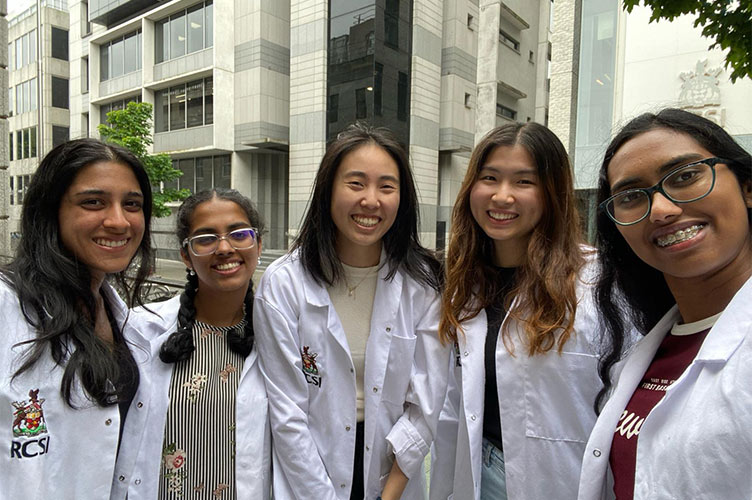
I have really enjoyed all the volunteering opportunities at RCSI, but one of the best memories has to be volunteering with The Olive Branch For Children in Tanzania. It was eye-opening to see healthcare from a completely different perspective and to work with people from all walks of life.
When I graduate, my dream career would be a family doctor who also volunteers internationally with organisations like Doctors Without Borders. I’d love to bring accessible, compassionate care to communities that really need it, mixing day-to-day family care with humanitarian outreach.
One piece of advice for new students would be to get involved as much as you can! Join clubs and societies, make friends from different programmes, travel around Ireland and Europe if you can, and try new things. Time at university goes by so quickly, and the memories you make outside the classroom are just as valuable as what you learn in lectures!
Some study tips that have saved me (and many of my friends) from drowning in lecture notes would be:
- Work smarter with flashcards I can’t survive without flashcards, especially for things like anatomy terms or pharmacology. Instead of making every card from scratch, I use Anki and download pre-made decks from Ankihub (so handy!). Sometimes I switch it up with Quizlet if I want a different style. The spaced repetition really works, trust me!
- Study groups ARE lifesavers Talking through topics with friends is a game-changer. It’s amazing how someone else might explain a difficult topic in a way that just clicks. Teaching someone else forces me to simplify concepts, and that’s when you know you truly understand them.
- Notes & OSCE prep I like making detailed notes for OSCE prep. Creating a simple history-taking checklist or flowchart really helped me get the steps right during practice.
- Don’t forget to take breaks Take breaks, take breaks, take breaks! Go for a walk and coffee, meet friends, do something completely non-medical. This helps you to make sure to keep your work and life balanced.
At the end of the day, everyone has different study habits, so try different methods and see what is the most effective for you. And remember, studying medicine is a marathon, not a sprint!
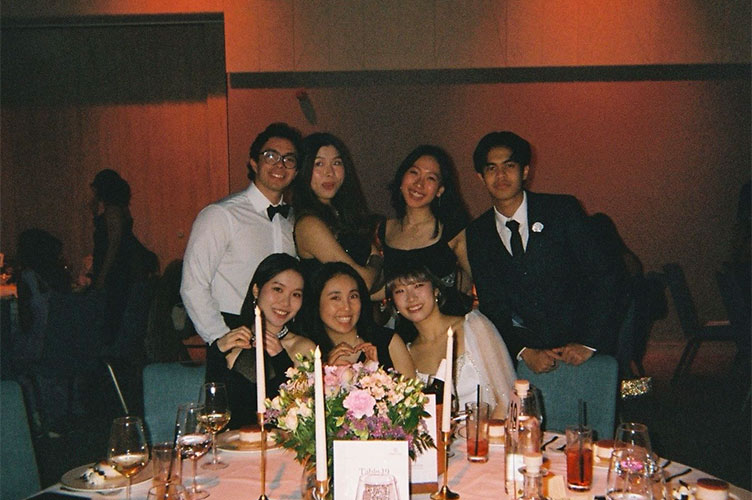
Sylvia Chan, Medicine