Three RCSI-led initiatives recognised at Irish Healthcare Awards 2026
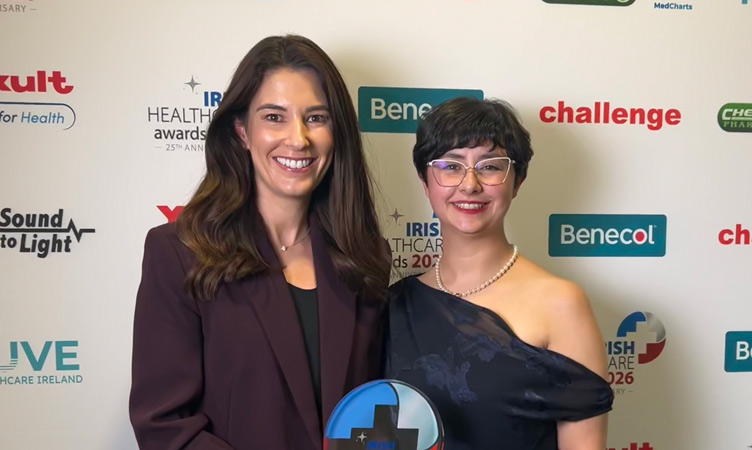
RCSI has been recognised with three awards at the Irish Healthcare Awards 2026, honouring initiatives that are improving patient care, advancing health education and supporting the sustainability of Ireland's healthcare system.
The awards recognise excellence and innovation across Irish healthcare and highlight the impact of collaboration between RCSI, the HSE and clinical partners in addressing some of the most pressing challenges facing patients and healthcare services.
The award-winning projects were:
- Sustainability Healthcare Initiative of the Year: Green Emergency Medicine (HSE/RCSI)
- Patient Education Project of the Year – Non-Pharmaceutical: Debunking the Myths – The Science Behind Our Sexual Health (RCSI Department of Obstetrics and Gynaecology)
- Outpatient Care Initiative of the Year: Testing of a National Osteoarthritis Hip and Knee Pathway (RCSI and HSE).
Commenting on the awards, Professor Cathal Kelly, Vice Chancellor and CEO/Registrar of RCSI, said: "These awards reflect the power of collaboration in addressing some of the most important challenges facing healthcare today. From supporting young people to make informed decisions about their health, to improving access to care for patients with osteoarthritis and reducing the environmental impact of healthcare delivery, each of these initiatives is improving lives in a tangible way.
"At RCSI, our mission is to educate, nurture and discover for the benefit of human health. These projects are excellent examples of that mission in action, bringing together expertise from across healthcare, academia and the wider health system to deliver measurable benefits for patients and society. I would like to congratulate all of the teams involved and thank our partners in the HSE and across the health service whose commitment and collaboration have made these achievements possible."
Green Emergency Medicine
Winner of the Sustainability Healthcare Initiative of the Year award, Green Emergency Medicine is a national programme supporting emergency departments and injury units to reduce their environmental footprint while maintaining high-quality patient care.
The initiative demonstrates how practical, evidence-based changes can reduce waste, lower emissions and improve resource use across emergency medicine settings, helping to embed sustainability into everyday clinical practice.
There are currently 11 emergency departments and injury units participating in the Royal College of Emergency Medicine's GreenED framework, with teams across the country leading projects that deliver benefits for patients, healthcare services and the environment.
The initiative has shown how frontline healthcare workers can drive meaningful climate action while improving care pathways, reducing unnecessary resource use and delivering measurable efficiencies.
A key driver of its success has been the partnership between the HSE Climate Action and Sustainability Programme, Spark Innovation Funding, the National Clinical Programme for Emergency Medicine at RCSI and the Royal College of Emergency Medicine. Through this collaboration, participating teams have been supported to share learning, adopt best practice and accelerate sustainable change across the health service.
The award recognises the programme's leadership in demonstrating how environmental sustainability can be embedded within healthcare delivery, creating lasting benefits for patients, staff and the wider health system.

Debunking the Myths – The Science Behind Our Sexual Health
Developed by the RCSI Department of Obstetrics and Gynaecology, Debunking the Myths – The Science Behind Our Sexual Health addresses misinformation and misconceptions surrounding sexual and reproductive health among young people.
The programme delivers expert-led, evidence-based education directly to secondary school students, helping them critically assess health information and make informed decisions about their well-being.
Since its launch in 2022, the programme has reached more than 23,300 students in 204 schools nationwide. In 2025 alone, it engaged over 6,400 students through 10 workshops delivered in 77 public, private and DEIS schools, as well as YouthReach centres.
A particular focus of the programme has been reaching students who may be at greater risk of exclusion from health education. In 2025, almost half (49%) of participating schools were educationally and socioeconomically disadvantaged, up from 22.6% in 2022, reflecting the programme's expanding reach among underserved communities.
The award recognises the programme's success in empowering young people with accurate health information and helping them navigate an increasingly complex digital information environment.
Debunking the Myths is funded through the Research Ireland Discover Programme.
National Osteoarthritis Hip and Knee Pathway
The National Osteoarthritis Hip and Knee Pathway, developed by RCSI and the HSE, has transformed how patients with osteoarthritis of these joints access care. The innovative model enables patients to receive appropriate conservative management and specialist support closer to home, reducing unnecessary hospital appointments while improving access, functional outcomes and patient experience.
Between April 2023 and June 2025, more than 2,000 patients were managed through the pathway, with over half referred directly by GPs from 67 participating practices across the two pilot sites (Navan/Meath and Carlow/Kilkenny).
The pathway significantly reduced the need for hospital-based care. Just 5.5% of patients required an outpatient appointment with an orthopaedic surgeon, with all appointments scheduled within ten weeks of referral, in line with Sláintecare targets. Only 2.4% progressed to surgical intervention.
Community-based care played a central role in the pathway's success, with 58% of patients participating in group interventions delivered by physiotherapists and dietitians within ten weeks of referral.
The award recognises the pathway's success in demonstrating how integrated, patient-centred care can improve service delivery, support more sustainable use of healthcare resources and ensure specialist services are available to those who need them most.
Funding for this project was secured through the Department of Health's Sláintecare Integration Innovation Fund (SIIF).

Shortlisted entries
In addition to the award winners, a number of RCSI-led and collaborative projects were shortlisted, demonstrating the breadth of innovation across RCSI and the strength of its partnerships with healthcare providers, clinicians, educators and community organisations.
The National Perioperative Patient Pathway Enhancement Programme, a collaboration between RCSI and the HSE, was shortlisted in the Best Healthcare Management Project category and received a Highly Commended distinction from the judges. The programme was recognised for its national scale, measurable improvements in surgical efficiency and patient access, and its successful implementation across hospitals nationwide.
Co-designed Mental Health Education for Eating Disorders: A Realist Evaluation of an Innovative Training Model for Future Healthcare Professionals, developed by St John of God University Hospital, Mental Health First Aid Ireland and RCSI was also shortlisted in both the Best Research Paper and Best Design categories. The programme was recognised for its innovative, co-designed approach to improving eating disorder awareness among future healthcare professionals and its demonstrated impact on student empathy and mental health literacy.